

Nordrhein-
Go to Nordrhein-
1. Aachen 1a. Aachen, Hauptbahnhof
2. Augustdorf 3. Rheinhotel Dreesen
4. Kurtenberg 5. Krahforst 6. Merzbach
7. Rheinbach 8. Meckenheim 9. Merl 10. Villip
11. Pech 12. Hotel Petersberg 13. Kurhaus Bad Salzulfen 14. Bad Schlangen 15. Barntrup
16. Ausstellungshalle Bielefeld
17. Blomberg 18. Evangelische Vereinshaus Bochum 19. Panzergrotte Bochum
20. TuS stadion Bochum
20a. Jahrhunderthalle, Bochum 21. Beethoven-
25. Westfalenhalle Dortmund
26. SA parade Dortmund
27. Wedauer Stadion Duisburg 28. Parkhotel Düsseldorf 29. Heinrich Hoffmann Store Düsseldorf 30. Nordpark Düsseldorf
31. Nordfriedhof Düsseldorf 32. Statue Drei Nornen Düsseldorf 33. Rheinmetall-
35. Villa Hügel Essen 36. Saalbau Essen
37. Ausstellungshallen Essen

Nordrhein Westfalen 1 weergeven op een grotere kaart
37a. Krupp factories Essen 37b. Hotel Vereinshaus, Essen 38. Bahnhof Gemünd
39. Zeche Rheinelbe Gelsenkirchen
40. Vestischen Kampfbahn Gladbeck
41. Gummersbach 42. Haus Busch Hagen 43. Lokal Märker Hattingen
44. Weiltorsaal Hattingen
45. Bahnhof Herzogenrath 46. Marktplatz Horn 47. Gaststätte Ratskeller Horn
48. Hohenhausen 49. Kalldorf
50. Düsseldorfer Hof Königswinter
51. Villa Schröder Köln 52. Domhotel Köln 53. Gürzenich Köln 54. Rathaus Köln
55. Rheinlandhalle Köln 56. Braune Haus Köln 57. Messegelände Köln
Radrennbahn
Location: Unknown
In 1932 (April 8) Hitler held a speech at the Radrennbahn in Essen.
Marriage of Terboven
Location: Unknown
Hitler flew to Essen to go to Gauleiter Terbovens marriage on the day before he arrested Ernst Röhm.
Hotel Vereinshaus (37b)
Location: Am Handelshof 5
Today: There have been several hotel buildings on this location. The modern hotel of today is called Essener Hof.
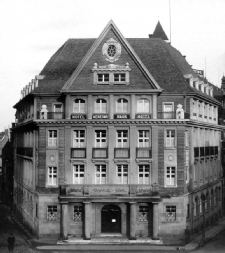
On June 16 and 20, 1926 Hitler held a speech at the Hotel Vereinshaus. The building of that time doesn’t exist anymore.
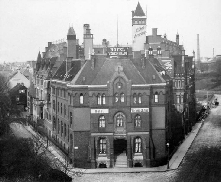
Westfalenhalle
Location: Unknown, could also be the Westfalenhalle in Dortmund...
On October 30, 1932 Hitler spoke at the Gautag of Gau Essen in the Wetsfalenhalle.
The old hotel in the beginning of
the 20th century
This is what the hotel looked like when Hitler was there in 1926.
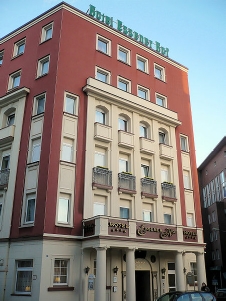
The hotel today
(picture: wikipedia)
DÜSSELDORF
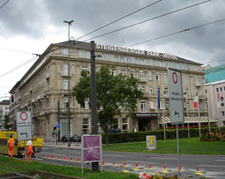
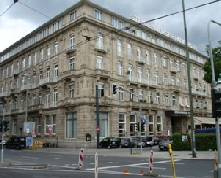
Düsseldorfer Parkhotel (28)
Location: Königsallee 1a
Today: Still there as Steigenberger Parkhotel
On January 26, 1932 Hitler spoke in the large ball room of the Parkhotel. On the 26th of January, 1936 Hitler had his famous meeting with a club of industrials in this hotel. There are pictures of Hitler in a car driving him through a crowd on the Königsallee in 1937.
Recent pictures of the Parkhotel (pictures: The Hitlerpages, 2008)
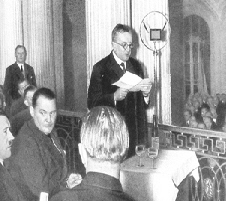
Hitler at the Düsseldorf Industrie Club (on the left edge of the picture)
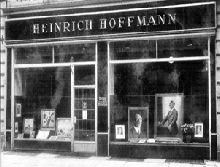
Heinrich Hoffmann Store (29)
Location: Graf-
Today: Barber shop
Heinrich Hoffmann had stores in different city’s. The left picture shows the one in Düsseldorf in 1937.
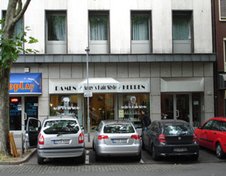
Hoffmanns store in 1937 (left) and the same location in 2008 (right) (picture: the Hitlerpages, 2008)
Nordpark (30)
Location: Between the Kaiserswertherstrasse and the Stockumer Kirchstrasse; navigate to Kaiserswertherstrasse 380 or Aquazoo
Today: The park is still there, the house of the Deutsche Arbeidsfront with the large exhibition halls behind it, have been removed a long time ago. The Aqua-
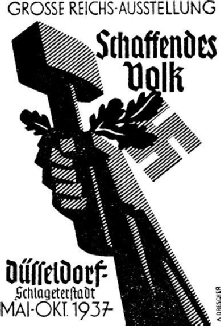
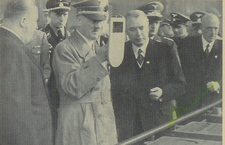
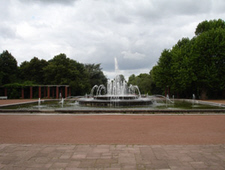
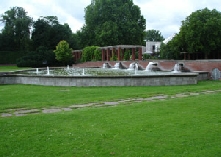
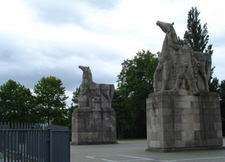
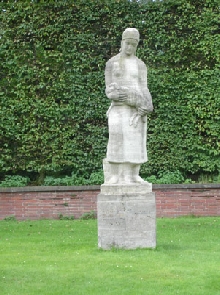
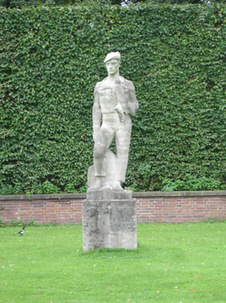
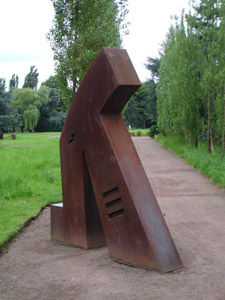
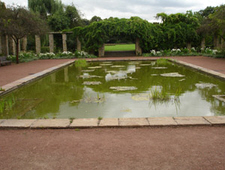
On the 2nd of October 1937 Hitler attended the exhibition ‘Das schaffendes Volk’ in Düsseldorf. The exhibition showed German progress in a lot of areas of society. Companies like Henkel, Siemens and AEG were presenting themselves. Millions of people came to see the exhibition. The park had a large fountain, the house of the Deutschen Arbeidsfromt and large exhibition halls. The art in the Nordpark caused a ‘Skandal’ when a picture of the Rossebändiger (the large statues at the entrance) of artist Edwin Scharff turned up at an exhibition called ‘Entartete Kunst’ (degenerated art). Hitler just had new ideas about art in 1937 and the statues of Scharff weren’t heroic enough. The statues inside the park (made by other artist) got part of the discussion and were taken away, but the large statues at the entrance remained, because they were too heavy to remove. In 1941 four of the statues were placed back in the park. Flowers were placed on the spots were the statues had been. In 2006 the statues called ‘Fisher’ and ‘Schäferin’ also returned. The rest of the removed art has gone.
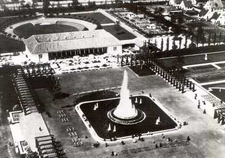
This old picture of the Nordpark shows the fountain with the Café der Konditoren-
(picture on the right: the Hitlerpages, 2008)
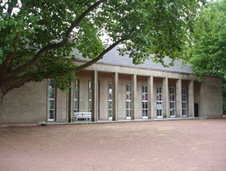
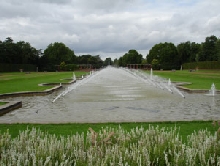
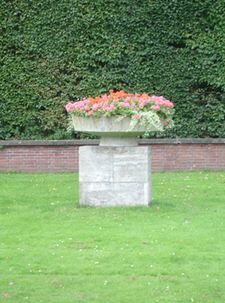
These so called Wasserspiele
are still there.
(picture: the Hitlerpages, 2008)
The original fountain in 2008
(picture: the Hitlerpages, 2008)
The Ballhaus that replaced the Café
(picture: the Hitlerpages, 2008)
Behind the fountain you can see a small part of the Aqua-
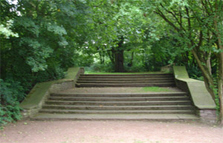
These stairs, somewhere behind the Aqua-
(picture: the Hitlerpages, 2008)
Flowers mark the spot of the dissapeared statues
(picture: the Hitlerpages, 2008)
The Falkner
(picture: the Hitlerpages, 2008)
The park today
(picture: the Hitlerpages, 2008)
The park today
(picture: the Hitlerpages, 2008)
The Schäferin
(picture: the Hitlerpages, 2008)
Location: Nordfriedhof, Hugo-
Today: I couldn’t find the grave, but Markus from Germany could. It is still there.
When Ernst vom Rath got killed by a jewish man on November 9, 1938, the German government used it as an excuse for the Kristallnacht that followed. The funeral of Vom Rath took place on the 17th of November. Hitler was there.
The Nordfriedhof used to have the Schlageter-
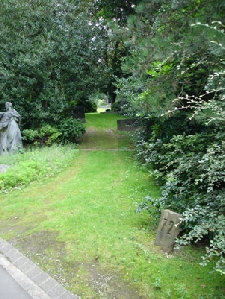
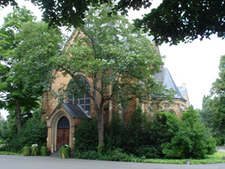
The church near the entrance of the graveyard
(picture: the Hitlerpages, 2008)
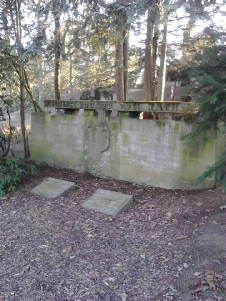
Field 72
(picture: the Hitlerpages, 2008)
The grave of Ernst, Doris and two Gustavs Vom Rath. A short impression of the grave is here, on youtube.
(picture: the Hitlerpages, 2013,
thanks to Markus)
Rheinmetall-
Location: Rheinmetall-
Today: the company has gone, a large administration building is still there
The Rheinmetal-
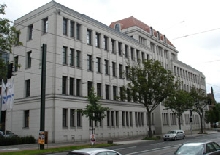
The building of the
Rheinmetall-
(picture: the Hitlerpages, 2008)
Radrennbahn Oberkassel
Location: unknown
Hitler held a speech at the Radrennbahn on April 8, 1932.
Machinenhalle (34)
Location: Hoffeldstrasse 101
Today: The original building has gone
On February 16, 1932 Hitler held a speech at the Machinenhalle in Düsseldorf.
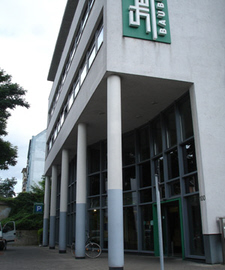
Hoffeldstrasse 101 today
(picture: the Hitlerpages, 2008)
Krupp Factories (37a)
Location: Altendorfer strasse: Krupps Stammhaus was rebuilt in 1961, the Krupp-
Today: Krupps Stammhaus was rebuilt in 1961, the Krupp-
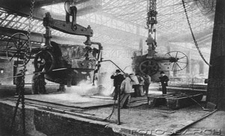
On the 27th of March, 1936 Hitler inspected the Krupp factory in Essen. Two enormous railway guns were built there, Dora and Schwerer Gustav. Years later at Rügenwalde the guns were tested. Hitler held a speech inside the factory. In 1937 Hitler came back to show Mussolini the Krupp factories.
The Krupp Werke in 1917
Villa Hügel (35)
Location: Stadtteil Bredeney, Hugelweg/Haraldstrasse
Today: Still there, there’s an archive about Krupp and there is an excibition
The villa Hügel was the family house of the Krupp family. Hitler was there a few times when he visited Essen.
Städtischen Saalbau (36)
Location: Huyssenallee 53, edge Stadtgarten
Today: Philharmonie. Bombed in 1943, the new building that dates 1949-
In 1926, 1927 and 1928 Hitler held speeches here.
Ausstellungshallen (37)
Location: On the Norbertstrasse 2 is a Messe. Near the Grugapark were halls; this park, that was made in the 20’s, is still there, but the area was bombed in the war.
Today: Not sure if there’s anything left of the original Ausstellungshallen.
In 1927 Hitler held a speech here. On August 15, 1930 he was back at this location for another speech. Hitler also spoke at the Ausstellungshallen of Essen on November 2, 1933.
ESSEN
Tent on the Steinberg (41)
Location: unknown, but there is a Festplatz in the area Gummersbach-
Adolf Hitler spoke in tent on the Steinberg in Gummersbach on October 31, 1932.
GUMMERSBACH
Haus Busch (42)
Location:Feldmühlen Strasse
Today: Still there, it houses an organisation for education of journalists
Before 1936 Adolf Hitler used to stay at this house of Franz Pfeffer von Salomon when he was in the Rheinland. In 1936 the mayer of Hagen wanted to turn the rooms Hitler used to stay in into historical Führer-
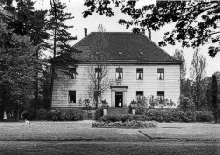
Haus Busch in 1930
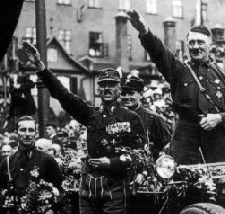
Pfeffer von Salomon and Hitler at the Parteitag in Nürnberg, 1927
HAGEN
Borgmannschen Saal
Location: unknown
On November 26, 1926 from 20.00-
Böttcherschen Saal
Location: unknown
On April 26, 1927 after 21.00 hours Hitler spoke at the Böttcherschen Saal in Hattingen.
Weiltorsaal (44)
Location: Unsure, there’s a Weiltor-
In October 1927 Hitler spoke at the Weiltorsaal in Hattingen.
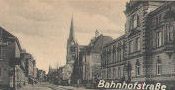
This part of an old postcard shows the Bahnhofstrasse, looking towards the Weiltor and the Kreishaus
Lokal Märker (43)
Location: Somewhere near the Reformierte Kirche and the Untermarkt
Today: Unknown
On June 15, 1926 Hitler spoke at the Märker.
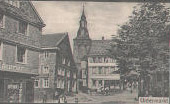
A (low quality) picture of the Märker taken from the direction of the Untermarkt
HATTINGEN
Vestischen Kampfbahn (40)
Location: Bohmertstraße
Today: still there, called Stadion Gladbeck; the stadium (or at least it’s entrance) is under ‘Denkmahlschutz’
Hitler spoke at the Vestischen Kampfbahn on July 24, 1932. On that same day he also spoke in Wuppertal, Duisburg, Osnabrück and Bochum.
GLADBECK
Zeche Rheinelbe (39)
Location: Rheinelbestrasse, Gelsenkirchen-
Today: some buildings are still there
Adolf Hitler was at the funeral of Emil Kirdorf on July 13, 1938. His funeral was at the Gelände der Zeche Rheinelbe. The Zeche Rheinelbe was a Steinkohlen-
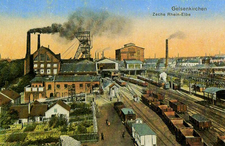
Zeche Rheinelbe like it was before
GELSENKIRCHEN
Bahnhof Gemünd (38)
Location: Alte Bahnhofstrasse (near the crossing of the B265 and B266)
Today: The former station of Gemünd is still there, but it’s not in real use anymore.
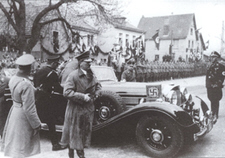
When Hitler visited Ordensburg Vogelsang in 1936 and 1937 he went to Gemünd by train. There he got into a car to drive to Vogelsang.
Adolf Hitler was at Ordensburg Vogelsang on April 28, 1937. This picture shows him after he arrived on the station of Gemünd
GEMÜND (SCHLEIDEN)
Festzelt (48)
Location: Unknown
On January 7, 1933 Hitler spoke inside a tent in Hohenhausen. There were 3.000 people present.
HOHENHAUSEN (KALLETAL)
Festzelt (49)
Location: Unknown
On January 7, 1933 Hitler spoke to 2.000 people inside a tent in Kalldorf.
KALLDORF
Düsseldorfer Hof (50)
Location: Not sure; could be the Rheinallee
Today: Unknown
Hitler spoke at the Düsseldorfer Hof (once called Heisterbacher Hof) on December 1, 1926.
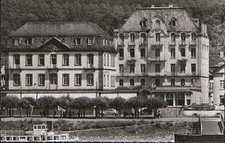
The Düsseldorfer Hof. You can see the river Rhine in front of the building, so the hotel must have been located on the Rheinallee
KÖNIGSWINTER
Tent on the Marrktplatz (46)
Location: Horn-
Today: Still there
On January 6, 1933 Hitler spoke on the Marktplatz of Horn.
HORN
Gaststätte Ratskeller (47)
Location: Horn-
Today: Maybe still there
On January 6, 1933 Hitler spoke at the Ratskeller.
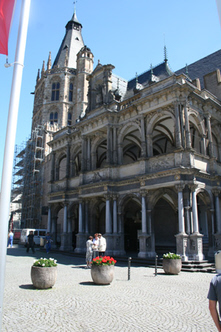
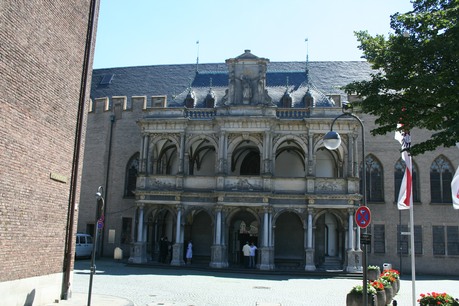
Rathaus (54)
Location: Judengasse 1
Today: Still there
On March 30, 1938 Hitler visited the Rathaus of Köln. He held a speech there.
The Rathaus in 2008 (pictures: the Hitlerpages, 2008)
Domhotel (52)
Location: Domkloster 2a
Today: Still there
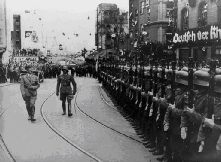
On March 28, 1936 Hitler was in Köln because of the Remilitarisierung des Rheinlands. On the square in front of the Dom and the hotel a large crowd kept on calling on Hitler to show himself on the balcony. After he’d done that, the crowd was quiet for about 15 minutes. Than they started yelling again. Hitler goes to the balcony again. This went on for quite a while.
The Domplatz and the
Domhotel in Köln
(colored pictures: the Hitlerpages, 2008)
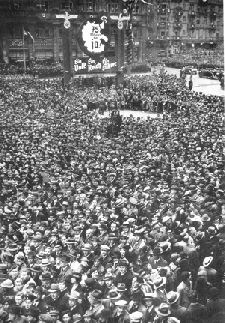
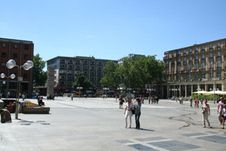
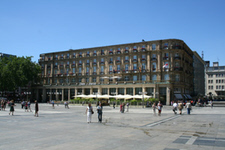
A large crowd gathers on the Domplatz to see Hitler
(picture: Heinrich hoffmann)
Hitler in Köln on March 28, 1936
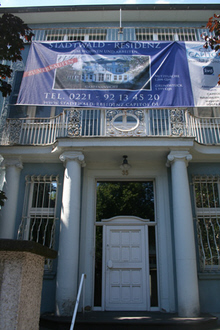
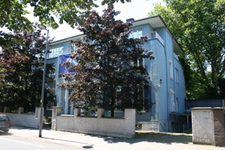
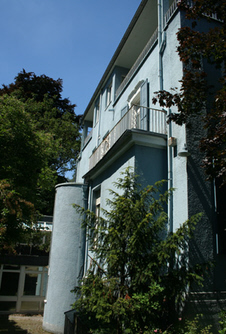
The villa on the Stadtwaltgürtel was for sale in July 2008
(pictures: th e Hitlerpages, 2008)
KÖLN
Coloured pictures: The Gürzenich today, outside and inside
(pictures: the Hitlerpages, 2008)
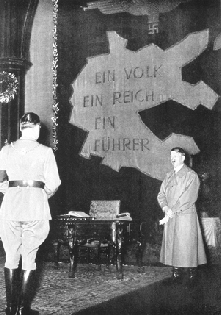
Hitler inside the Gürzenich, looking at the wall behind him, this must be in 1938
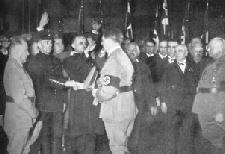
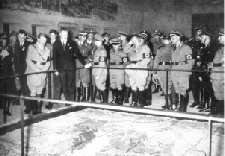
Above: Inside the Gürzenich
Under: Looking at a map of the Saarland (in the Gürzenich?)
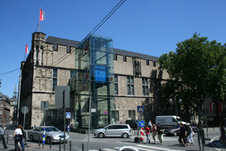

Gürzenich (53)
Location: Martinstrasse/Gürzenichstrasse
Today: Still there
On March 28, 1936 Hitler was celebrated by the peopleof Köln at the Gürzenich.
Villa Schröder (51)
Location: Köln-
Today: Still there
Hitler and Franz von Papen met eachother in the villa of baron Kurt von Schröder on January 4, 1933. It was a secret meeting between Von Papen, who had been Reichskansler before. He hoped to become chancellor again, with Hitler’s help. Hitler wanted to rule the country himself.
Some fragments of Von Schröder’s statement under oath about the meeting :
‘Ich, Kurt Freiherr von Schroeder, nachdem ich darauf aufmerksam gemacht worden bin, daß ich mich wegen falscher Aussage strafbar mache, stelle hiermit unter Eid freiwillig und ohne Zwang folgendes fest ...’
‘Als ich Papen im Dezember sah, sagte er mir: "Ich glaube, daß es jetzt vielleicht möglich wäre, eine Zusammenkunft herbeizuführen, um die strittigen Punkte aufzuklären. Wir müssen eine Möglichkeit zur Zusammenarbeit der Rechtsparteien finden. Am 4. Januar 1933 trafen Hitler, von Papen, Heß, Himmler und Keppler in meinem Hause in Köln ein.’
‘Hitler, von Papen und ich begaben uns in mein Arbeitszimmer, wo eine zwei Stunden dauernde Besprechung stattfand. Heß, Himmler und Keppler nahmen an der Besprechung nicht teil, hielten sich aber im Nebenzimmer auf.’ ‘Hitler brachte Himmler und Heß mit sich, da sie zu einer Wahlversammlung in Lippe unterwegs waren. Die Verhandlungen fanden ausschließlich zwischen Hitler und Papen statt, ich nahm keinen Anteil daran. Die Besprechung begann ungefähr 11.30 Uhr morgens.’
‘Weiterhin führte Papen aus, daß er es für das beste halte, eine Regierung zu formen, bei der die konservativen und nationalen Elemente, die ihn unterstützt hatten, zusammen mit den Nazis vertreten seien. Er schlug vor, daß diese neue Regierung womöglich von Hitler und Papen zusammen geführt werden sollte. Daraufhin hielt Hitler eine lange Rede, in der er sagte, daß, wenn er zum Kanzler ernannt würde, Anhänger von Papen als Minister an seiner (Hitlers) Regierung teilnehmen könnten, sofern sie gewillt wären, seine Politik, die viele Änderungen bestehender Zustände verfolgte, zu unterstützen.’
‘Es wurde vereinbart, daß weitere Einzelheiten noch zu bearbeiten seien und daß dies in Berlin oder (an) einem sonstigen geeigneten Platz vorgenommen werden könne. Dies erfolgte, wie ich später erfuhr, in einer Zusammenkunft mit Ribbentrop.’
‘Die Besprechung in meinem Hause endete um ungefähr 1.30 Uhr. Wir drei begaben uns dann zusammen mit Heß, Himmler und Keppler zu Tisch, wobei über allgemeine Dinge Konversation gemacht wurde. Um ungefähr 4 Uhr verließen alle Gäste mein Haus.’
(Source: the NS-
Rheinlandhalle (55)
Location: Venloer Strasse 389
Today: Damaged during the war, the Radrennbahn that was part of it, has gone. Today there are shops and a fitnesscentre inside the building.
Hitler held a speech at the Rheinlandhalle on August 18, 1930.
Second visit of Hitler to Köln
Locations: Not known by the Hitlerpages editor
On the 30th of March 1938 Hitler was in Köln again for the so called Volksabstimmung for the Anschluss with Austria.
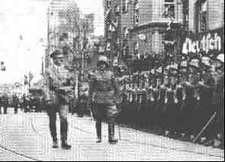
Above: Hitler in Köln, date unknown, but probably 1936
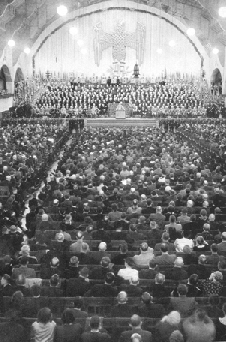
Right: Hitler speaks in Köln, date and exact location unknown
Messegelände (57)
Location: The area between the Rheinparkweg and the Deutz-
Today: Most halls are new.
Hitler held a speech at the Messegelände on March 9, 1932. On October 30, 1932 Hitler spoke at the Osthalle of the Gelände. On February 19 and October 26, 1933 Hitler also spoke at the Kölner Messehalle. On March 30, 1938 Hitler spoke to 60.000 people at the Messehalle.
The area was turned into a place where forced labourers ‘lived’. There also was a so called ‘Außenlager’ of the concentration camp Buchenwald. On the Kennedyufer is a memorial (Mahnmal) to remember the things that happend here. It says: "Das Messegelände und die Messegebäude und der anschließende Bereich bis hin zum Tanzbrunnen waren während des zweiten Weltkrieges zentraler Ort der nationalsozialistischen Gewaltherrschaft in Köln. Hier befand sich eine Reihe von Lagern, ein Außenlager des KZs Buchenwald. Lager für Kriegsgefangene, Zwangsarbeiterinnen und Zwangsarbeiter, ein Sonderlager der Gestapo für deutsche und ausländische Häftlinge -
Festwiese Deutz
Location: Somewhere in Köln-
Hitler held a speech here on July 28, 1932, after 18.45 hours.

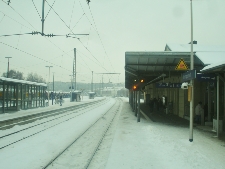
The railroad track
(picture: the Hitlerpages, 2010)
HERZOGENRATH

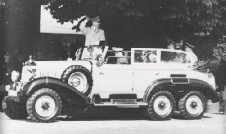
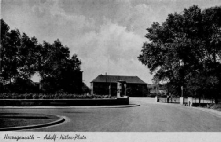
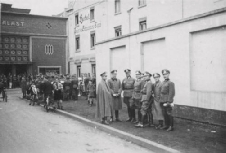
May 14, 1939: Adolf Hitler arriving at the station of Herzogenrath. Wilhelm Keitel and Albert Bormann are also on this picture. (internet picture: mentioned source Jo Ploum)
The station of Herzogenrath today (picture: the Hitlerpages, 2010)
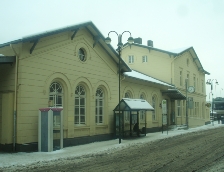
The station building of Herzogenrath today (picture: the Hitlerpages, 2010)
When Hitler arrived at the station of Herzogenrath people gathered to see him. The dark building in the back is the former Roda-
Hitler left by car from the Adolf-
(internet picture: mentioned source Jo Ploum)
Location: Bahnhofstraße (station)
Today: The station is still there.
Adolf Hitler’s train must have halted at the trainstation of Herzogenrath in 1936. In 1939 Hitler inspected the defense zone in the area of Herzogenrath.
Inspection route (45a-
Locations: The exact route Hitler took is unknown, but there are several Westwall remains north of Herzogen-
Today: Remains of the Westwall are still there.
Somewhere in 1939 Hitler inspected the defense zone in the area of Herzogenrath. Look here for the westwall-
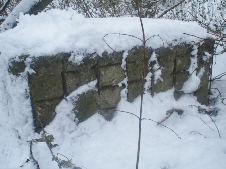
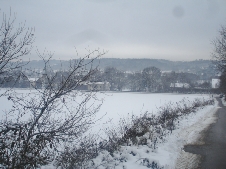
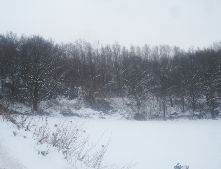
One of the small hills north of Herzogenrath where the Westwall bunkers used to be. They were hard to find back because of the snow.
(picture: the Hitlerpages, 2010)
View from the Westwall to Kerkrade in Holland (picture: the Hitlerpages, 2010)
One of the view remains I could find back in the snow
(picture: the Hitlerpages, 2010)
DUISBURG
Wedauer Stadion (27)
Location: Margaretenstraße 5-
Today: the stadium is called the MSV-
On July 24, 1932 Hitler spoke at the Wedauer Stadion in Duisburg for about 55.000 people.
Westfalenhalle (25)
Location: Rheinlanddamm 200
Today: The old Westfalenhalle doesn’t exist anymore, the new one was built after the war.
On March 10, 1932 Hitler spoke at this location. He spoke at the Westfalenhalle again on Sunday 30 October 1932 at 4 p.m., together with Gauleiter Wagner. There’s a so called Gedenkstein (stone of remembrance) in the Westfalenhalle 3b for the prisoners that died during the bombing of the old hall. On February 17, 1933 Hitler spoke at the Westfallenhalle again.
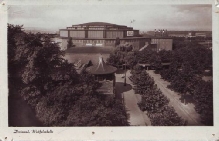
The old Westfallenhalle
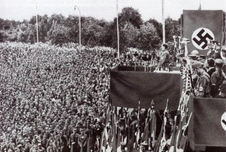
Hitler speaks in Dortmund. Date and location unknown.
DORTMUND
SA-
Location: Kuhstrasse or Hiltropwall
Today: The stadttheater was bombed. There’s a new theater today.
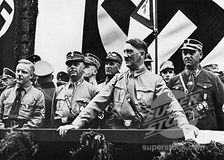
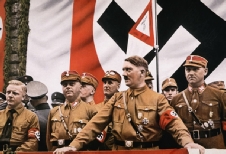
Hitler was present at a parade of the SA, section Westfalen on July 9, 1933, somewhere at city centre. He also held a speech on this occasion.
Adolf Hitler, Josef Wagner, Wilhelm Schepmann and Victor Lutze at the SA-
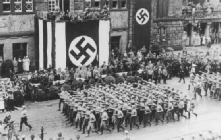
The SA-
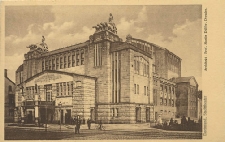
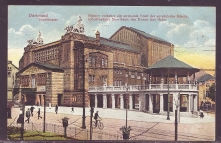
Two old postcards of the Stadttheater. Hitler stood in front of the portal building on the left.
BÖSINGFELD
Festzelt (22)
Location: Unknown
Hitler spoke to 7.500 people in a tent in Bösingfeld on January 4, 1933.
Festzelt on the Kronenplatz (23)
Location: Kronenplatz, between the Arminstraße and the Industriestraße
Today: Still there
Hitler spoke to 10.000 people on the Kronenplatz of Detmold on January 5, 1933
DETMOLD
Detmolder Flughallen (24)
Location: Somewhere in the area of former Fliegerhorst Hohenloh: Richthofenstraße/Charles-
Today: Some buildings are still there, like Hangar 21.
On January 15, 1936 Hitler spoke at the Detmolder Flughallen at the Erinnerungsfeier of the Wahlkampf of 1933 in Lippe.
1926 visit -
Location: Near Detmold, at the end of the Hermannsweg
Today: Still there
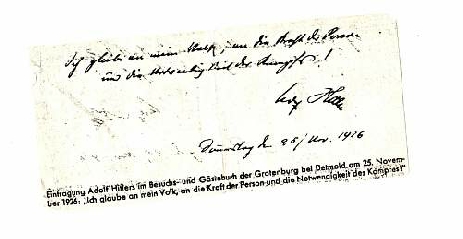
Because Adolf Hitler sent a postcard from Detmold and Paderborn to Maria Reiter (that was written or arrived on November 25, 1926) he must have been in the area of Detmold and Paderborn in the period before November 25. What he was doing in the region is not entirely clear to me yet. If you know more about this visit, please send an e-
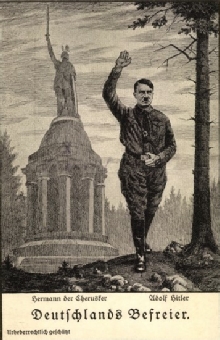
An entry in the guestbook of the Grotenburg mountain near Detmold might prove he was in the area. It seems like he visited the Hermannsdenkmal on the mountain in November 25, 1926. Historian Ian Kershaw mentions the Hermannsdenkmal as a symbol of the myth of the German Reich.


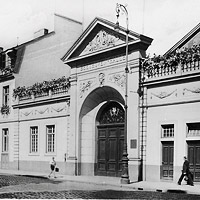
Beethovenhalle (21)
Location: Wachsbleiche 26
Today: The old hall was bombed; a new one was opened in 1959.
Hitler spoke at the Beethovenhalle in Bonn on November 28, 1926, from 17.00 until 19.00 hours.
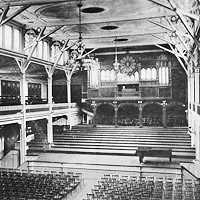
Left and centre: the old Beethovenhalle
BONN
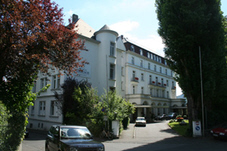
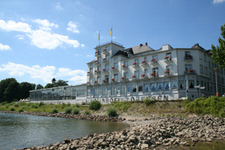
Rheinhotel Dreesen (3)
Location: Rheinstrasse 45-
Today: Still there
Hitler visited the Rheinhotel more than 50 times. The first time he was there was on November 28, 1926. On August 19, 1933 Hitler spoke at a meeting of SS-
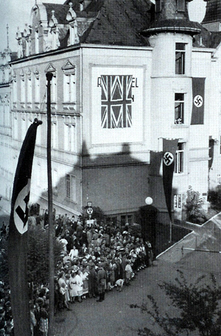
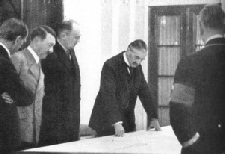
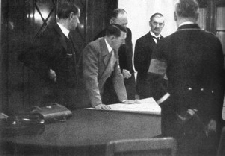
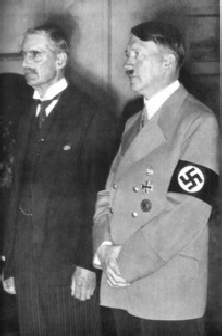
The Rheinhotel Dreesen in September 1938
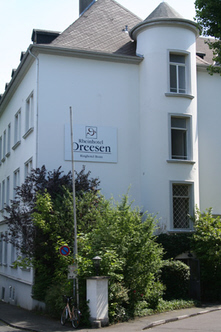
BAD GODESBERG
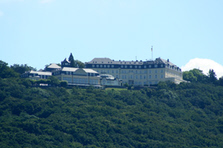
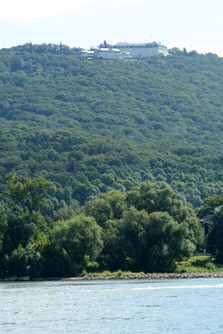
The hotel in July 2008. On the other side of the river you can see the Petersberg Hotel (both pictures on the right). (pictures: The Hitlerpages, 2008)
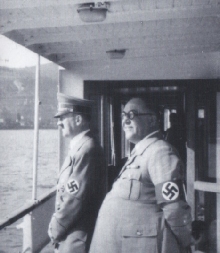
Adolf Hitler and dr. Morell on a boat trip on the river Rhine, near Bad Godesberg in September 1938
(picture: Neumann, Eberle, 2009)
AACHEN
Stadion Krummerück (1)
Location: Unknown, maybe near the Schopenhauerstrasse
On July 28, 1932 Hitler held a speech at this stadium in Aachen.
Hauptbahnhof (1a)
Location: Bahnhofplatz 2a
Today: The original station was built in 1905. It was destroyed in 1944, but restored in 1950.
Hitler was in Aachen several times, mostly passing through by train. On October 21, 1914 he was there for the first time. He was on his way to Lille, to join the German troops at the Belgian front. Years later, in 1940, he past through Aachen when he was on his way to Hendaye to meet Franco.
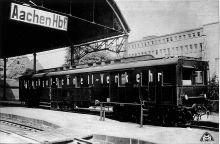
Aachen Hauptbahnhof in 1932
Westwall
Location: Exact location unknown
Today: There are still some Westwall remains in the area.
In May 1939 Hitler inspected the Westwall near Aachen and Herzogenrath.
AUGUSTDORF
Speech for farmers (2)
Location: Unknown
On January 6, 1933 Hitler spoke for farmers in Augustdorf.
BAD SALZUFLEN
Kurhaus (13)
Location: Parkstraße 26
Today: Still there
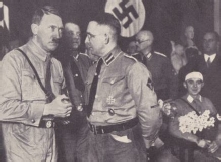
On January 14, 1933 Hitler spoke to about 8.000 people at the Kurhaus in Bad Salzuflen.
Left: Adolf Hitler and Gauleiter Alfred Meijer at the meeting in January 1933 in Bad Salzuflen (picture: Illustrierter Beobachter, 1936)
BAD SCHLANGEN
Festzelt (14)
Location: Unknown
On January 12, 1933 Hitler spoke inside a tent somewhere in Bad Schlangen.
BARNTRUP
Festzelt (15)
Location: Unknown
On January 13, 1933 Hitler spoke to 5.000 people inside a tent somewhere in Barntrup.
BIELEFELD
Ausstellungshalle (16)
Location: Am Stadtholz/Echendorfer Strasse
Today: The hall has gone, there’s an industrial area.
On November 16, 1930 Hitler held a speech at the Ausstelungshalle in Bielefeld.
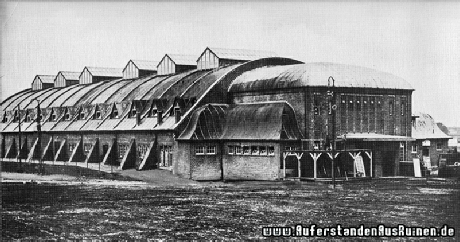
The old Ausstellungshalle in Bielefeld is long gone. Thanks for the picture to PB of Aufenstandenausruinen. (picture: aufenstandenausruinen.de)
BLOMBERG
Speech (17)
Location: Unknown
On January 13, 1933 Hitler spoke to 5.000 people somewhere in Blomberg.
Evangelische Vereinshaus (18)
Location: Karl-
Today: not sure
On June 15, 1926 Hitler spoke at the Evangelischen Vereinshaus. The Evangelical Church still has property on several locations of this street, but if the original building is amongst them, I don’t know.
BOCHUM
Panzergrotte (19)
Location: Hattingerstrasse 80? Bochum-
Today: Not sure, could be called Leroy Bar now
On November 17, 1927 Adolf Hitler spoke at the Panzergrotte.
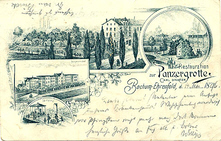

Two postcards of the Panzergrotte from around 1900
TuS-
Location: Küpper Strasse/ Am Stadion
Today: New stadion called Ruhrstadion or Rewir Power Stadion
Hitler spoke at the TuS-
Ausstellungshalle des Bochumer Vereins -
Location: An der Jahrhunderthalle 1
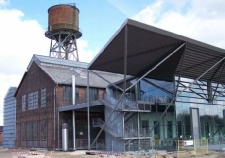
Today: Still there. Renovated in 2003.
Hitler was here somewhere in 1935 together with Hermann Göring.
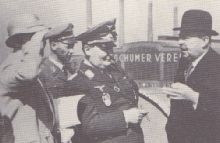
Adolf Hitler, Hermann Göring and the BV-
The Jahrhunderthalle today
(picture: wikipedia, 2004)


NSDAP-
Location: Mozartstrasse 28
Today: A ‘Gedenktafel’ marks the location of the old NSDAP-
Hitler held a speech at the NSDAP-
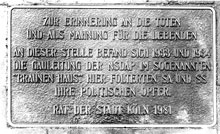
Picture: The ‘Gedenktafel’ at the Mozart strasse. It says:
‘ZUR ERINNERUNG AN DIE TOTEN UND ALS MANUNG FUR DIE LEBENDEN
AN DIESER STELLE BEFAND SICH 1933 UND 1934 DIE GAULEITUNG DER NSDAP IM SOGENANNTEN ‘BRAUNEN HAUS’ HIER FOLTERTEN SA UND SS IHRE POLITISCHEN OPFER
RAT DER STADT KOLN 1981
(picture: www.ursula-
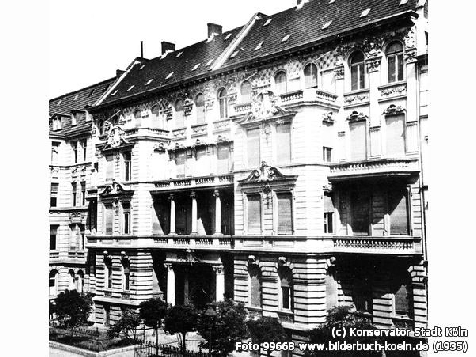
Das Braune Haus in Köln
(picture: bilderbuch-