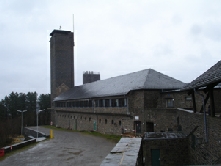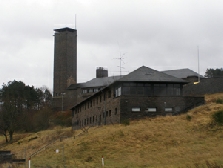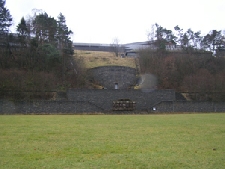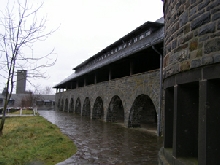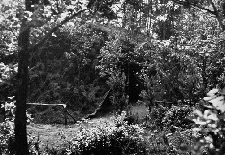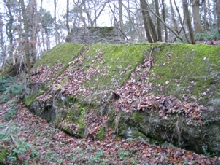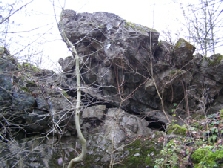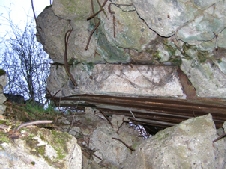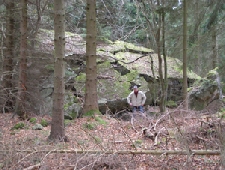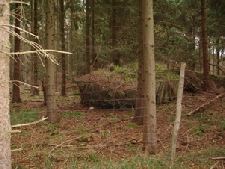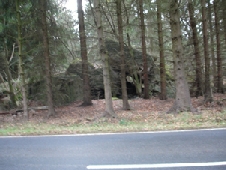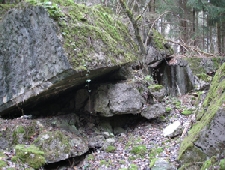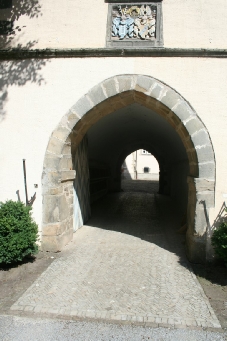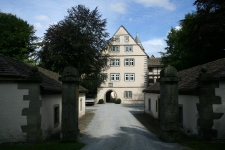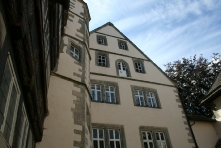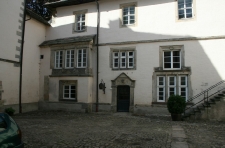







Streithof (7)
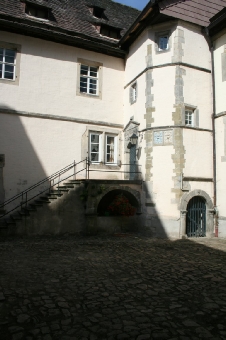
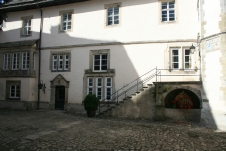
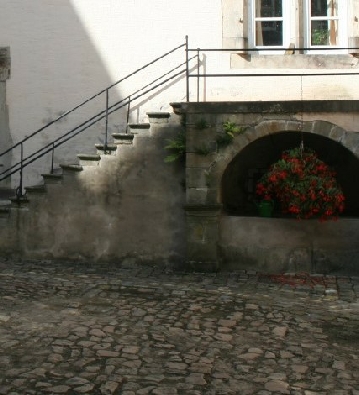
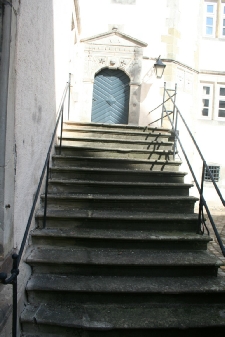
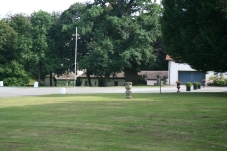
Location: Freundhofweg 5
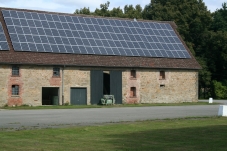
Today: Still there, it was used as a home for the elderly; not sure about it’s use today
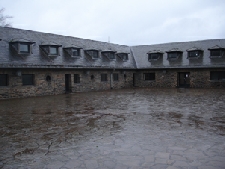
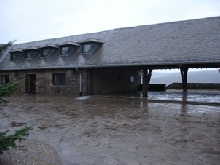
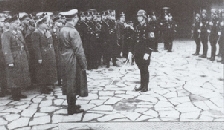
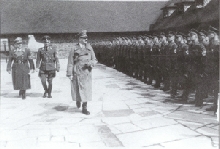
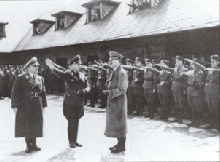
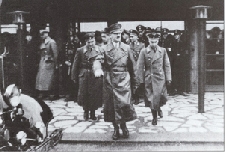
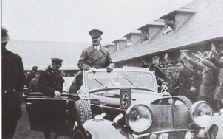
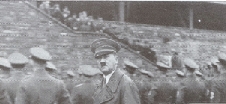
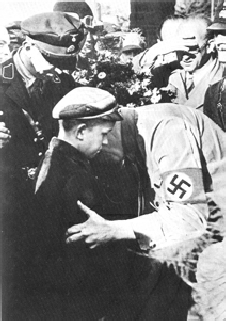
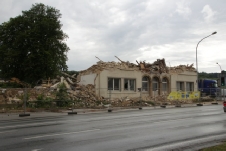
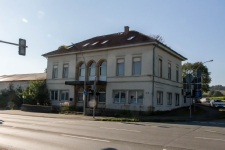
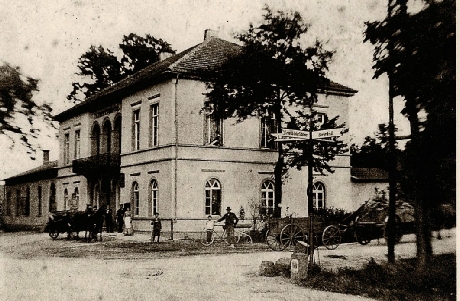
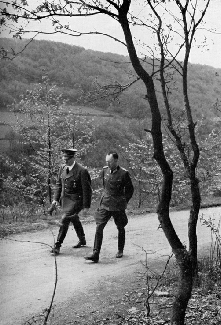
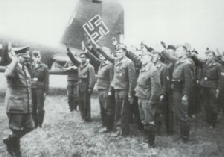
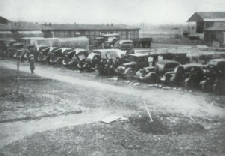
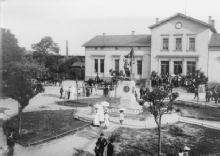
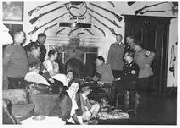
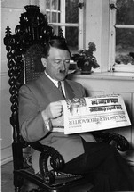
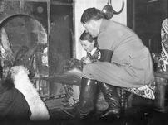
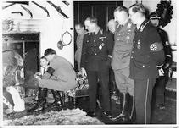
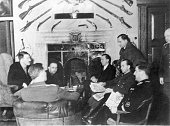
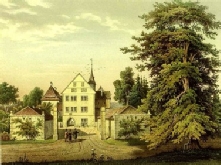
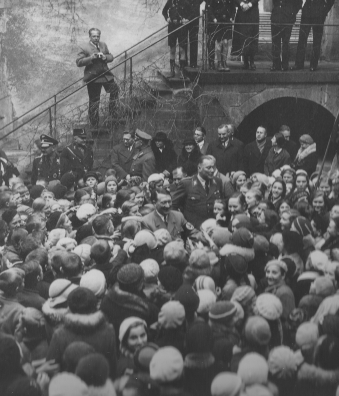
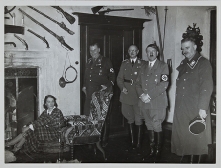
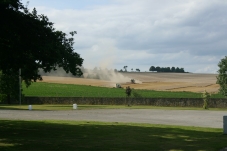
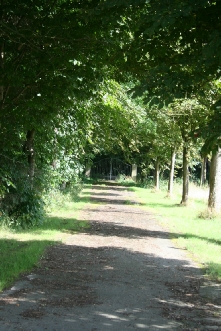
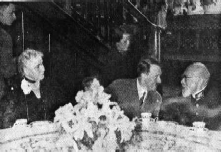
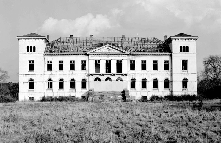
The Streithof was the house of the important industrial Emil Kirdorf. Hitler visited this house several times in 1930/1931, for instance to speak at a meeting of industrial leaders of Germany. Hitler was also present at the 90st birthday of Kirdorf in April 1937. When Kirdorf died in 1938 Hitler attended a ceremony in Kirdorfs honour in Gelsenkirchen.
Hitler and Kirdorf
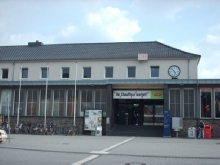
Streithof today
MÜHLHEIM AN DER RUHR
HOME.
NORDR.-WESTFALEN.
BAD.-WURTEMBERG.
RHEINL.-PFALZ - SAARLAND.
NIEDERSACHSEN.
SCHLESW.-HOLSTEIN - HAMBURG.
BAYERN 1.
BRANDENBURG.
THURINGEN.
HESSEN.
SACHSEN.
SACHSEN-ANHALT.
MECKLB.-VORPOMMERN.
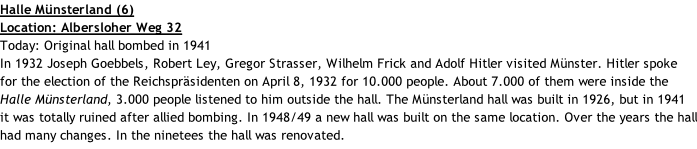
Halle Münsterland (6)
Location: Albersloher Weg 32
Today: Original hall bombed in 1941
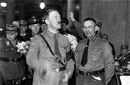
In 1932 Joseph Goebbels, Robert Ley, Gregor Strasser, Wilhelm Frick and Adolf Hitler visited Münster. Hitler spoke for the election of the Reichspräsidenten on April 8, 1932 for 10.000 people. About 7.000 of them were inside the Halle Münsterland, 3.000 people listened to him outside the hall. The Münsterland hall was built in 1926, but in 1941 it was totally ruined after allied bombing. In 1948/49 a new hall was built on the same location. Over the years the hall had many changes. In the ninetees the hall was renovated.
The Münsterland hall today
Bad picture of Hitler in Halle Münsterland
Somewhere in Münster Hitler met Franz Pfeffer von Salomon
Location: Unknown
Just after Hitler got out of prison, in 1926, he went to Münster to visit former Freikorpsführer Franz Pfeffer von Salomon, to aks him to lead the SA.
MÜNSTER
Schützenhaus (2)
Location: Schützentwete 20
Today: Original building burned down in 1976, in 1980 a new Schützenhaus was built
On January 8, 1932 Hitler came to the Schützenhaus in Lemgo for a speech. On January 11, 1933 Hitler spoke at the Alten Schützenhaussaal of Lemgo. A picture of that date of him shows him during a speech inside a tent. About 3.000 people came to listen to him.
LEMGO

Erinnerungstreffen Landtagswahl Lippe-Detmold January 1933

Location: Unknown

On January 14, 1934 Hitler held a speech at a ceremony to remember the elections of 1933 in Lippe-Detmold.


Festzelt on the Jahnplatz (1)
Location: Janhnplatz; a Sportplatz with that name is near the Eichenallee
Today: Not sure
On January 9, 1933 Hitler spoke inside a tent at the Jahnplatz to 5.500 people.
LAGE
Festzelt (4)
Location: Unknown
On January 12, 1933 Hitler spoke to 10.000 people inside a tent somewhere in Lipperode.
LIPPERODE
Gasthof Heckewerth (3)
Location: Unknown
On January 5, 1933 Hitler spoke in a tent near the Gasthof Heckewerth in Leopoldshöhe.
LEOPOLDSHÖHE

Schloss Buddenberg (5)

Location: Schloßallee, the river Lippe runs around the west-, south- and east-side of the castle grounds.

Today: The castle was taken down in 1977; a hedge marks the exact spot where the castle was.

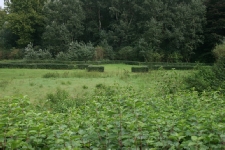
On June 29, 1934, the day before the Röhm-putsch, Hitler was at the castle Buddenberg in Lünen. There is a picture of him there, but it’s not possible to show that picture here yet.


LÜNEN

Left: The castle just before it was taken down in 1977.

(picture: www.wikipedia.de)

Right: A hedge marks the castlewalls (picture: Björn Harste/Shopblogger, July 7, 2007, www.wikipedia.de)
 

Hermannsdenkmal (20)
Location: Near Detmold at the end of the Hermannsweg
Today: Still there
Hitler saw the two monuments: the Hermannsdenkmal and the Niederwalddenkmal (Hessen) when he was on his way to the battlefields of the first World War in 1914. It is said that he was very impressed.
The Hermannsdenkmal near Detmold today
TEUTOBURGERWALD
Ordensburg Vogelsang (21)
Location: Burg Vogelsang 1, Schleiden. Near the Belgian border and Bad Münstereifel; 8 kilometer from Gemünd, on the road 266 to Aachen; one kilometer from a place called Morsbach.

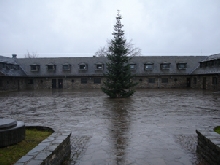
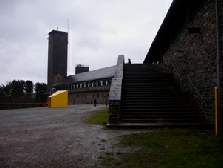
Today: Vogelang was damaged after the war, but it was restored. It was used by the allied forces after the war. Since 2006 Vogelsang is open for the public; it looks a lot like it did in NS-times.
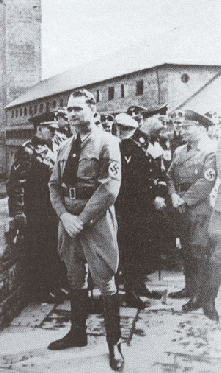
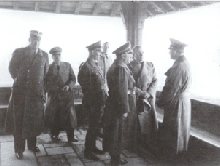
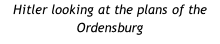
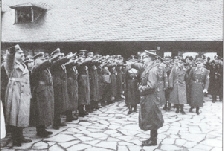
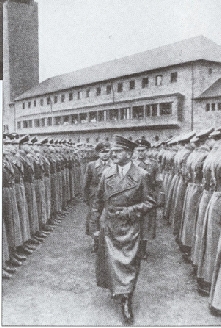
Hitler visited Vogelsang on November 20, 1936 and on April 28, 1937. Ley, Hess, Himmler and Rosenberg were with him on at least one of the trips. There’s talk of a third visit, but the prove of that is poor. The NSDAP built 4 schools in Germany, the Ordensburge. They were used to educate (for instance) the political leaders and the SD. The Belgian army and other western forces used the Ordensburg from 1950 untill 2005. Today it’s German territory again.
The 1936 arrival went something like this: 9:04: Hitler arrives at the station of Kall, after a short stop the train goes on to the station of Gemünd. A car takes Hitler to Vogelsang. On the B266, just after Herhahn two women break through the cordon to give flowers to the Führer. 10:01: Hitler arrives at Vogelsang. A large crowd of working-men gathers around Hitlers car, just before the car turns into the street to Vogelsang. (Ordensburg Vogelsang ... im Wandel der Zeiten, Hans-Dieter Arntz)
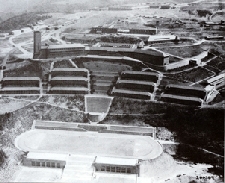
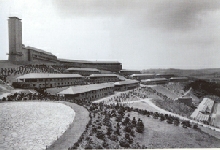
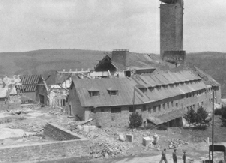
Vogelsang in the NS-period
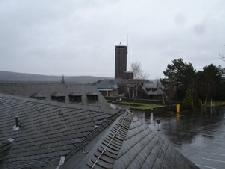
Two oversights of the Vogelsang area
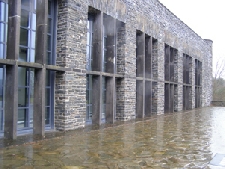
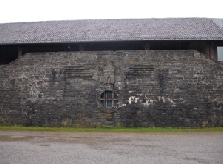
The Ordensburg Vogelsang in December of 2007 (pictures: The Hitlerpages, 2007)
Two more pictures of Vogelsang today (pictures: The Hitlerpages, 2007)
The damaged buildings of the Ordensburg, just after the war
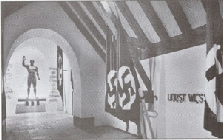
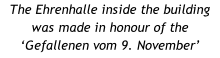
The Ehrenhalle inside the building was made in honour of the ‘Gefallenen vom 9. November’
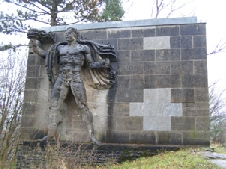
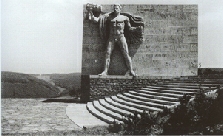
The Fackelträger than and now. The stairway is not longer there. The text right from the statue has been partly removed. It said to the ones that were ‘educated’ here: IHR SEID DIE FACKELTRAGER DER NATION IHR TRAGT DAS LICHT DES GEISTES VORAN IM KAMPFE FUR ADOLF HITLER
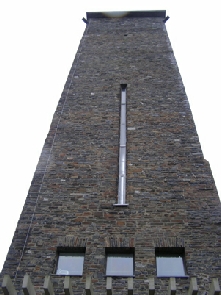
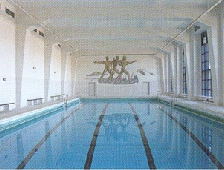
Left: the tower   Right: the swimming pool (both pictures)
(pictures: The Hitlerpages, 2007)
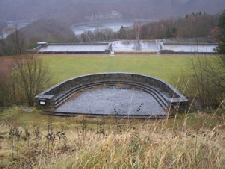
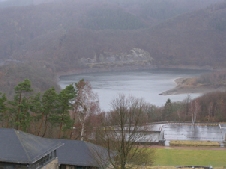
Two views downhill (pictures: The Hitlerpages, 2007)
Left: Hitler at Vogelsang
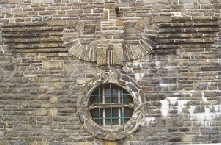
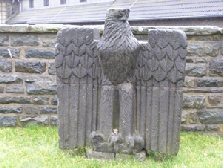
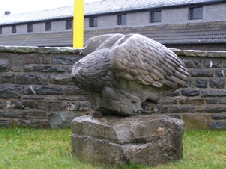
The birds at Vogelsang (pictures: The Hitlerpages, 2007)
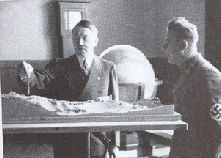
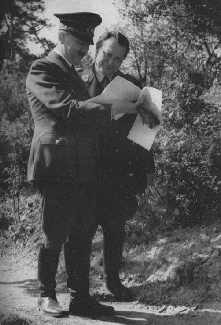
Hitler looking at the plans of the Ordensburg
The stairway on the riverside of the building (picture: The Hitlerpages, 2007)
Hitler in front of the same stairway
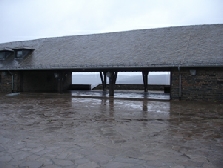
Left and right: Hitler and Hess in front of Vogelsang  Centre: the building today has only two floors above ground level. (pictures: The Hitlerpages, 2007) On the other pictures the building still has three floors.
The central square looks pretty much the same as it did when Hitler was there. (coloured pictures: The Hitlerpages, 2007)
More pictures of the central area of Vogelsang (coloured picture: The Hitlerpages, 2007)
VOGELSANG
Westwall visits (22a-25f)
Location: From Aachen along the entire border of Germany
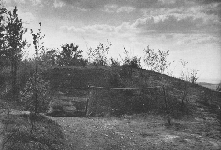
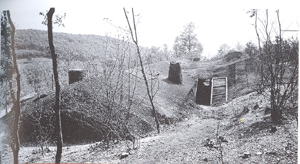
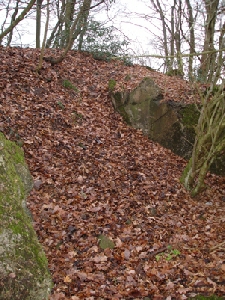
Today: A lot of remains of the Westwall are still there. I don’t know if Hitler visited the locations mentioned below. They’re just exemples of remains of the Westwall today.
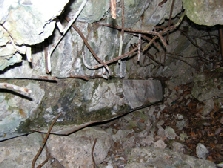
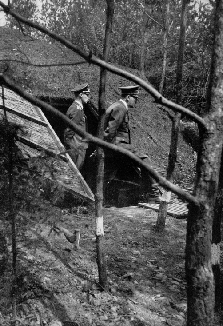
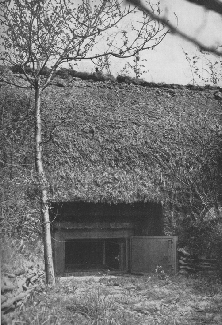
Hitler visited the Wetswall several times, for instance in the period of August/September 1938. Between May 15 and 19, 1939, Hitler looked at the Westwall in Herzogenrath (North of Aachen) (22a-22j) and than he inspected the Westwall in the Eifel (23a-23d), the Moseltal (Rheinland Pfalz: 24a-24c), Saarland and the Pfalz (Rheinland Pfalz: 25a-25f) and the Oberrhein region (Baden-Würtemberg). Sites like www.west-wall.de, www.7grad.org and www.westwall.elvamie.nl give more information about the Westwall today.
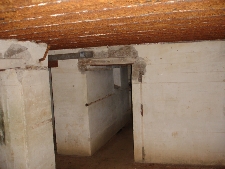
A picture of the inside of a Westwall bunker in the Buhlert complex (Eifel region)
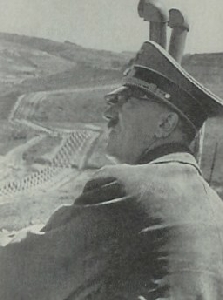
Hitler at the Westwall in 1940
Copyright Maik Kopleck (PastFinder Ltd.)
WESTWALL
Geschäftsstelle NSDAP Elberfeld (27)
Location: Holzerstrasse (exact number unknown)
Today: Not sure, on June 30, 1929 Barmen, Elberfeld, Vohwinkel, Ronsdorf and Cronenberg were joined together, the Holzerstrasse lies inside the city Wuppertal since than
On June 13, 1926 Adolf Hitler visited these NSDAP headquarters in Elberfeld.
Picture from a Hoffmann book
Location: Unknown
The picture below was taken in Elberfeld.

Hitler in Elberfeld

(picture: Heinrich Hoffmann)

Stadion am Zoo (28)
Location: Hubertusallee 4 (Elberfeld)
Today: The stadium was built in 1924; it burned down in 1932 but it was rebuilt in 1972 the stadium was renovated, without ruining the old stadium
On July 24, 1932 Hitler and Goebbels spoka at the Stadion Zoo during an ellection campagne.
The stadium today, the typical building on the left picture reminds of the past
(source: www.stadionbesuch.de)
Evangelische Vereinshaus (26)
Location: Kasinostrasse 1 (Elberfeld)
Today: It seems like it is still there.
This location was the scene where right wing radicals and anti semitic groups gathered. Hitler spoke at the Vereinshaus twice, in 1922 and in 1926, in the grossen Saal. Later the building became a Gestapo building.
WUPPERTAL - ELBERFELD
Festzelt on the Burgplateau (19)
Location: Not sure, maybe near the Burghotel on Burg 70 or near the street Am Burgweg
Today: Unknown
On January 8, 1933 Hitler spoke at the Burgplateau in Schwalenberg to 4.500 people.
SCHWALENBERG
Gaststätte Scherenkrug (8)
Location: Not sure, but it looks like the Gaststätte was near Oerlinghausen, in a village called Asemissen. The crossing of the Detmolder Strasse and the Tunnelstraße is called Scherenkrug. Maybe the Gaststätte was somewhere near it.
Today: It looks like it’s not longer there.
On January 5, 1933 Hitler spoke to 5.000 people inside a tent near the Gaststätte Scherenkrug.
OERLINGHAUSEN
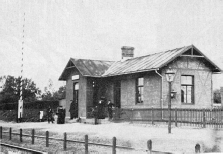
Station Palenberg (9)
Location: Bahnhofstrasse
Today: Not sure about the authenticity of the building.
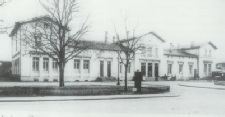
Hitler was at the Palenberg station on August 27, 1938.
The station of Palenberg in 1900
PALENBERG
Complex with bunker and rooms for soldiers and staf (11)
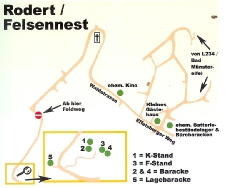
Location: Effelsbergerweg crossing Schiessbachstrasse, first green dot on the right of the Felsennest map
Today: Changed, but still there; private property
Dr. Morell and Bormann stayed at this location when they were in the Felsennest area.

Kleine Gästehaus (12)
Location: Effelsbergerweg, second green dot on the right of the Felsennest map
Today: Changed, but inside the house a heavy bunker door must still be there; private property
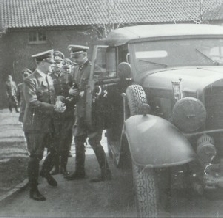
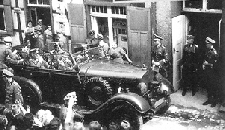
The secretaries of Hitler lived here, when Hitler was here in 1940. Hitler visited this house at least once. On the first day he was in Rodert (May 10, 1940) he went to look at the Large and the Little Guesthouse in the village. He also visited the OKW-baracke.
Hitler at the location of the Batterie Bestandelager, or the Gästehaus in Rodert
Cinema (13)
Location: Waldstrasse 16
Today: Changed, but still there
Every tuesdaymorning at 10 o’clock Hitler saw the latest news (Wochenschau) here. He also saw the antisemitic movie Der ewige Jude here.
Above: Hitler going to the cinema in Rodert  Right: The same house today
Führer Haupt Quartier (FHQ) Felsennest (10)
Location: In Rodert you follow  the Waldstrasse untill the end. There’s place to park your car. A path called the Feldweg runs to the Eselsberg where the Felsennest ruïns are.
Today: Blown up under unclear cercomstances in 1945, remains and bunkers are still there
Hitler was here in the autumn of 1939, because of  a possible invasion of France and the Low Coutries. He was there again on May 10, 1940 for the actual invasion. He stayed here untill June 6, 1940. After that he went to FHQ Wolfsslucht (Belgium and France).
A good view of how the FHQ was placed on the mountain
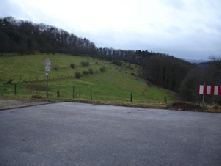
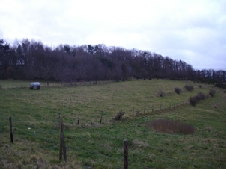
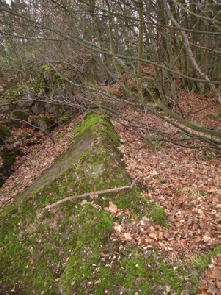
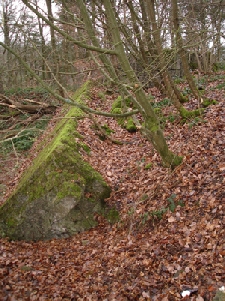
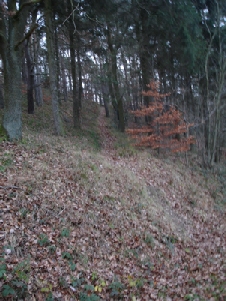
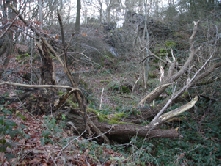
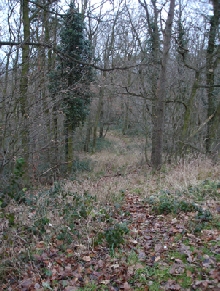
At the end of the Waldstrasse is a place were you can park your car. A path runs up to the Eselsberg. In the woods on the left of the left picture was the Felsennest. Walk past the woods untill the path takes a turn to the left. On your right hand runs a path downhill to the remains of the Kartenraum, on your left is a path uphill that leads to the Felsennest bunker (pictures: The Hitlerpages, 2008)
A small path leads up to the Eselsberg, were the remains of the  Felsennest are.
(picture: The Hitlerpages, 2008)
Left picture: the Felsennest from the other side; Right picture: the Führer Haupt Quartier hidden in the trees
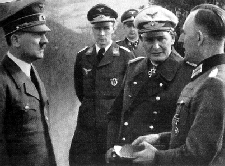
The Felsennest, the Felsennest area and Hitler and Göring at the Felsennest (pictures: Heinrich Hoffmann)
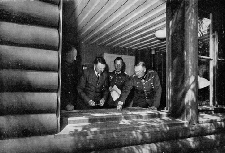
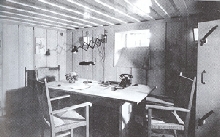
Hitlers working room at the Felsennest
The Führer Haupt Quartier Felsennest in 1940, with on the right
the window of Adolf Hitlers room (pictures: Heinrich Hoffmann)
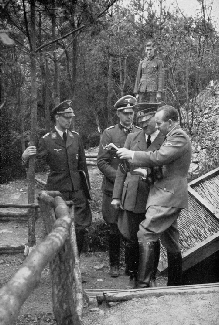
Hitler and Göring, listening
(picture: Heinrich Hoffmann)
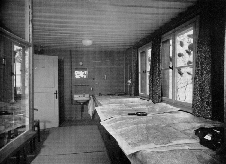
The so called Kartenraum
(picture: Heinrich Hoffmann)
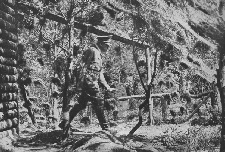
Left: the Kartenraum  Right: Someone leaves the Kartenraum
(pictures: Heinrich Hoffmann)
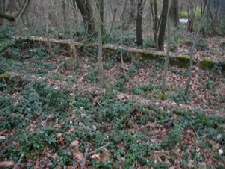
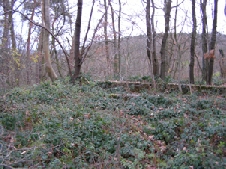
The Kartenraum foundations (pictures: The Hitlerpages, 2008)
The path running downhill to the remaining foundation of the Kartenraum
(picture: The Hitlerpages, 2008)
The Felsennest was blown up, but around a large hole in the ground you can see the countour of the bunker in the straight lines of the concrete remains. (pictures: The Hitlerpages, 2008)
Felsennest remains (pictures: The Hitlerpages, 2008)
Remains of the roof of the bunker
(pictures: The Hitlerpages, 2008)
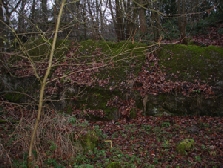
Two pictures that show the construction of the bunker (pictures: The Hitlerpages, 2008)
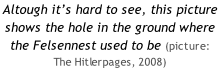
Altough it’s hard to see, this picture shows the hole in the ground where the Felsennest used to be (picture: The Hitlerpages, 2008)
Other bunker remains (pictures: The Hitlerpages, 2008)
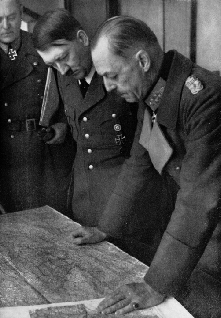
Hitler and Von Rundstedt
(picture: Heinrich Hoffmann)
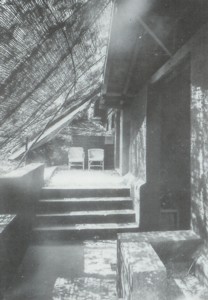
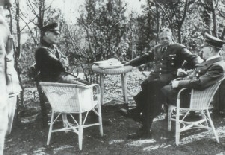
Above: outside the Felsennest
Right: the bunkers were hidden underneath nets
RODERT
Rollbahnbrücke (16)
Location: Take the L11 in Palmersheim to Flamersheim, turn left to Rheinbach, after two roads on the right, a path to the right turns up; a few hundred meters from the road lies the small bridge
Today: Still there
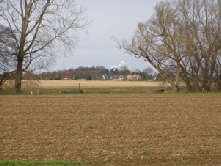
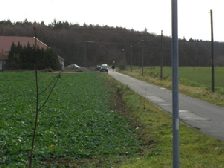
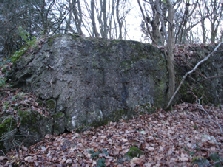
This bridge over the small river Orbach was used to transport plains into the woods when allied air raids took place. There’s no direct connection to Hitler, but it’s the only leftover of the Felsennest Flugpatz.
Left: between the trees is the Rollbahnbrücke
Right: The woods where the plains were taken to
(picture: The Hitlerpages, 2008)
Forsthaus Hülloch (17) / Hauptquartier des Oberkommando des Heeres (18)
Location: Driving from Rodert to Rheinbach on the L234 you go left to Rheinbach on the L498. After 1,5 kilometers the Forsthaus is on your left. Across the road form the driveway is a guardhouse that belonged to the bunker complex. The bunkers are visable from the road on the left and right side of the road; the villa is private property
Today: Under the same mysterious cercomstances as the Felsennest the bunkers were blown up at the end of the war
With it’s 7 large bunkers and barracks the Hauptquartier des Heeres (Army Headquarters) was much larger than the Felsennest. It was blown up in March 1945. Hitler visited the Hülloch area only once, at the 11th of May 1940.
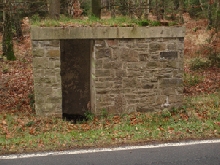
The guardhouse
(picture: The Hitlerpages, 2008)
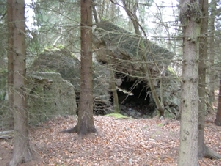
Bunker remains on the Hülloch property (behind a fence)
(picture: The Hitlerpages, 2008)
The bunkers on the other side of the road are not on private grounds (picture: The Hitlerpages, 2008)
The bunkers are visable from the road side (picture: The Hitlerpages, 2008)
More bunker remains
(picture: The Hitlerpages, 2008)
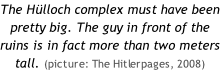
The Hülloch complex must have been pretty big. The guy in front of the ruins is in fact more than two meters tall. (picture: The Hitlerpages, 2008)
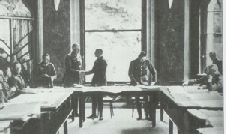
Inside the Forsthaus. Hitler is not present on this picture.
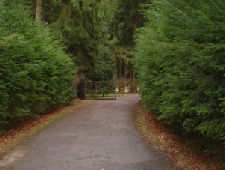
The driveway to Forsthaus Hülloch (picture: The Hitlerpages, 2008)
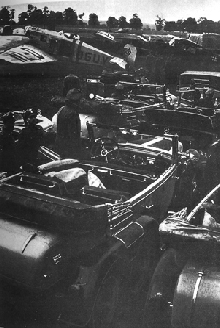
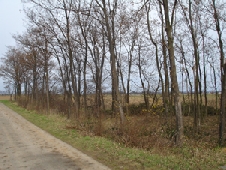
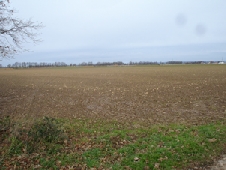
Above and right: The Feldflugplatz near the Felsennest
Feldflugplatz Odendorf (15)
Location: in Palmersheim take the L11 to Odendorf, take the first (small) road to the left, when you see a road or path from the right, you’re already facing the former airfield
Today: Nothing left but a Rollbahnbrücken (see below)
This temporary airfield was made in 1938/1939. Hitler used it and Göring and Goebbels did too. Hitler used the airfield on May 17, 1940, for a flight to Bastogne; on May 24 1940 to fly to Charleville and on June 1, 1940 for a flight to Brussels. On June 2, 1940 he flew back from Charleville to Odendorf. At the end of the war Eisenhower landed on the airfield. Patton was there to pick him up.
June 2, 1940, Hitler has just landed in Odendorf after a journey through Belgium and the North of France
There’s nothing left of the airfield.
(pictures: The Hitlerpages, 2008)
Bahnhof Euskirchen (14)
Location: Bahnhofstrasse/Alleestrasse
Today: The station was modernised in the past.
Hitler arrived at the station of Euskirchen on the 10th of May, 1940 at 04.25 hours. He was heading for the Felsennest in Rodert. From Euskirchen he was driven through Rheder - Kreuzweingarten - Iversheim - Münstereifel to Rodert. At 5 o’clock Hitler arrived at the Felsennest. At 5.35 hours the attack on France and the low countries began.
The station of Euskirchen in diffrent periods of time. The right picture (source Wikipedia) is the most recent one.
RODERT REGION

Nordrhein-Westfalen has a lot of places that are interesting to visit.  On this page you’ll for instance find the Felsennest, the Ordensburg Vogelsang and the Hermannsdenkmal.

Visit Nordrhein Westfalen 1 for the famous Rheinhotel Dreesen, the Nordpark in Düsseldorf and the Gürzenich in Köln.    

1. Jahnplatz Lage 2. Schützenhaus Lemgo

3. Heckewerth Leopoldshöhe 4. Lipperode

5. Schloss Buddenbrg Lünen 6. Halle Münsterland Münster 7. Streithof Mühlheim

8. Scherenkrug Oerlinghausen 9. Station Palenberg 10. Felsennest Rodert

11. Stafbunker Rodert 12. Gästehaus Rodert 13. Cinema Rodert 14. Bahnhof Euskirchen

15. Feldflugplatz Odendorf 16. Rollbahnbrücke  17. Forsthaus Hülloch 18. Oberkommando des Heeres Hülloch 19. Schwalenburg

20. Hermannsdenkmal Teutoburgerwald

21. Ordensburg Vogelsang 22a -22j Westwall Herzogenrath 23a - 23d Westwall Eifel

24a - 24c Westwall Trier (Rheinland Pfalz)

25a - 25f Saarland and Pfalz (Rheinland Pfalz) 26. Evangelische Vereinshaus Wuppertal

27. NSDAP Elberfeld (Wuppertal) 28. Stadion am Zoo (Wuppertal)  

NORDRHEIN-WESTFALEN 2
NORDRHEIN-WESTFALEN

THE HITLER PAGES

HISTORICAL HITLER SITES


Nordrhein Westfalen 2 weergeven op een grotere kaart