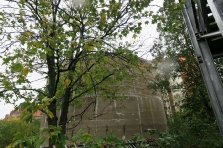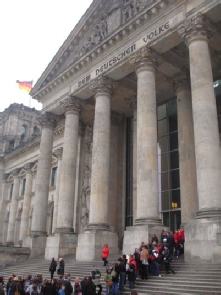
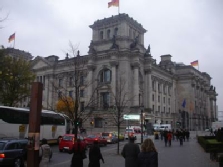
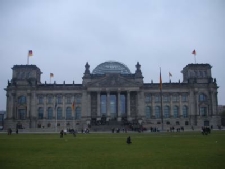
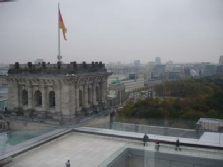
Every day a lot of tourists visit the Reichstag.
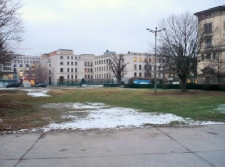
(picture: the Hitlerpages, 2009)
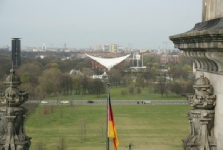
The backside of the building. The Berlin wall ran close behind it.
(picture: the Hitlerpages, 2009)
The front of the building
(picture: the Hitlerpages, 2009)
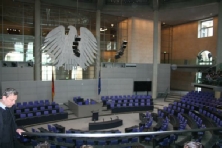
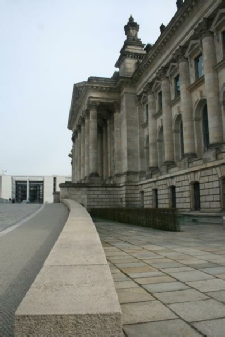
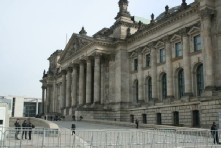
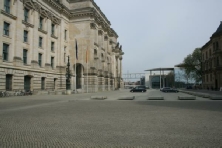
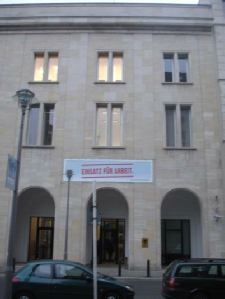
In 2012 the visitors of the Reichstag building entered through a not permanent building in front of it. (picture: the Hitlerpages, 2012)
The Reichstag building can be photographed again without rows of tourists in front of it. (picture: the Hitlerpages, 2012)
Behind the Reichstag building
(picture: the Hitlerpages, 2012)
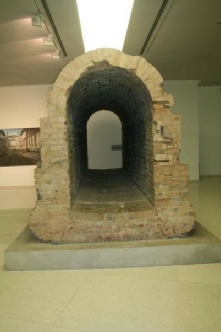
Inside the building a part of the tunnel through which the men who set fire to the Reichstag entered in 1933 is displayed. (picture: the Hitlerpages, 2012)
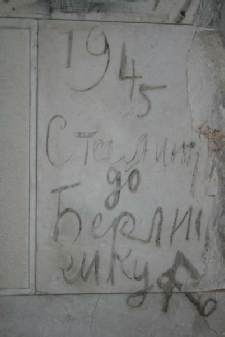
Russian soldiers wrote messages on the walls in 1945.
(picture: the Hitlerpages, 2012)
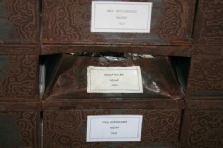
Art inside the Reichstag building: the name of every (past) member of the Reichstag is on it, even the name of Adolf Hitler.
(picture: the Hitlerpages, 2012)
Here the German parliament gathers. (picture: the Hitlerpages, 2012)
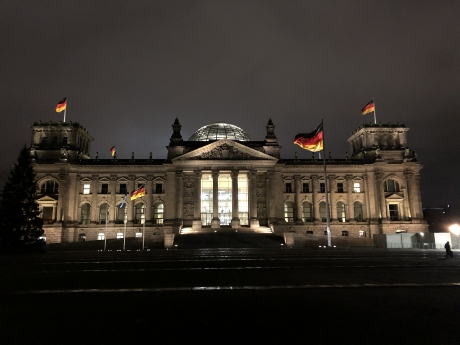
The Reichstag by night again (picture: the Hitlerpages, 2019)

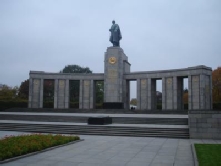
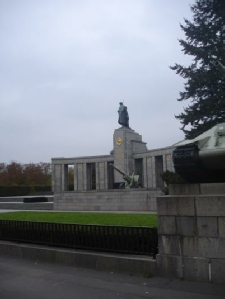
The Russian Monument on the Strasse des 17. Juni
(picture: the Hitlerpages, 2009)

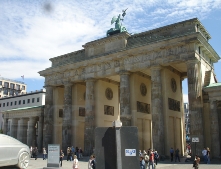
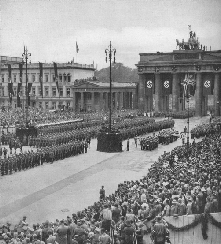

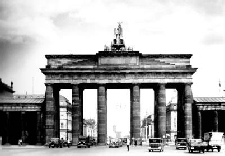
The Brandenburger Tor in 1924
(picture: Berlin, Damals und Heute, 2009)
The Brandenburger Tor in 2014
(picture: the Hitlerpages, 2014)
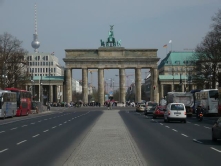
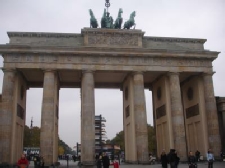
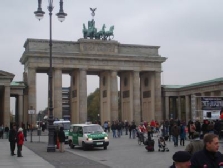
The Brandenburger Tor in 2009
(pictures: the Hitlerpages, 2009)
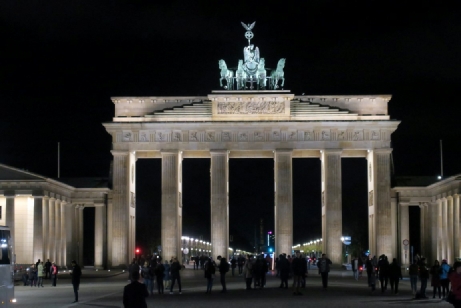
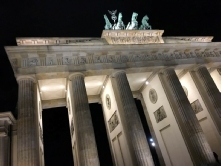
The Brandenburger Tor as seen from the Pariser Platz
(pictures: the Hitlerpages, 2017)
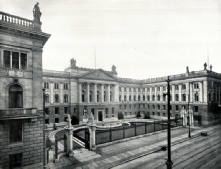

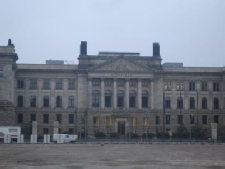
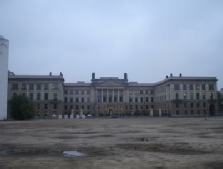


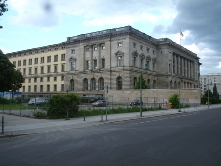
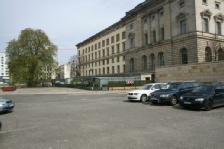
Preußischen Landtag (18)
Location: corner Stresemannstraße and Niederkirchnerstraße
Today: The Abgeordnetenhaus is located here now.
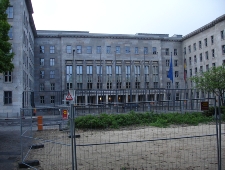
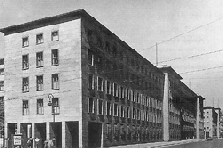
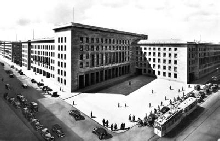
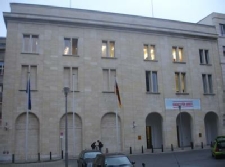
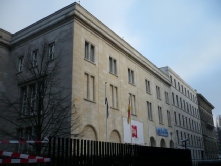
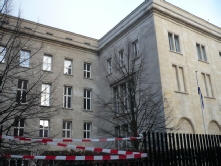
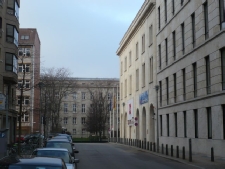
Before 1933 the Preußischen Landtag was located here. In the times of National Socialism the building was used as Volksgerichthof, later on as Preußenhaus and after that it became the Haus der Flieger, a part of the Rechsluftfahrtministerium. On December 11, 1932 Adolf Hitler spoke here in the Plenarsaal of the Preußischen Landtag.
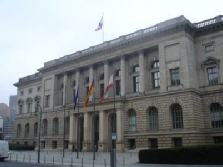
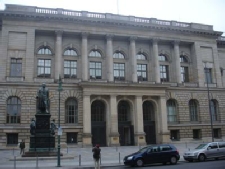
The same building today
(pictures: the Hitlerpages, 2009)
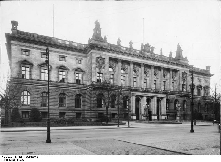

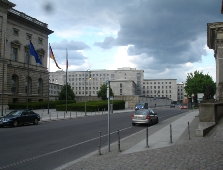
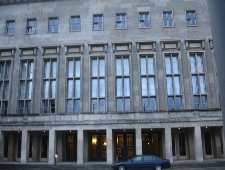

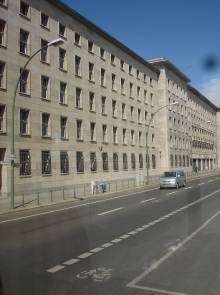
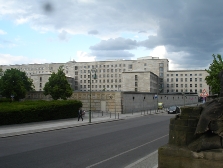

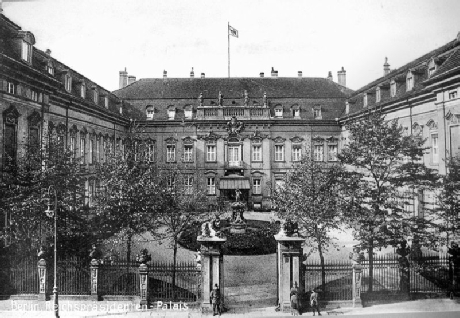
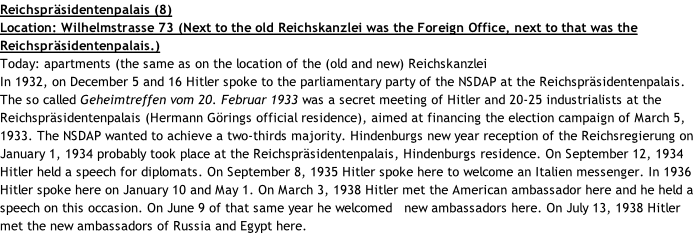
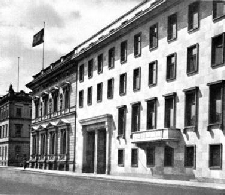
The Reich President’s Palace
© public domain, source: www.wikipedia.de
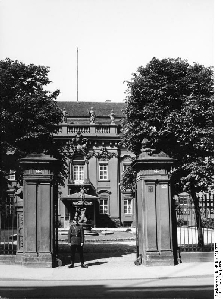
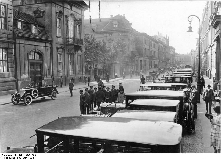
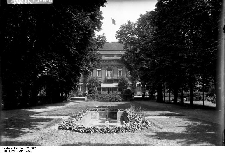
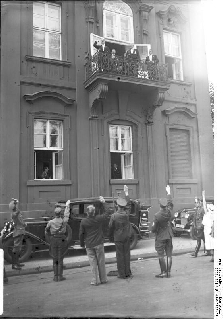
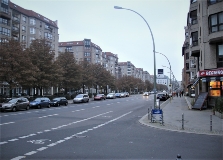
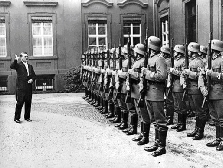
The palace guard in 1939
(picture: Bundesarchiv, wikipedia, 1939)
Adolf Hitler on one of the balconies directly on the Wilhelmstrasse
(picture: Bundesarchiv, wikipedia, 12 September 1934)
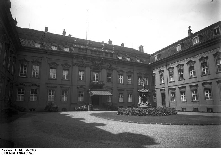
The front of the palace (picture: Bundesarchiv, wikipedia, Januari 1932)
The park on the backside of the palace (picture: Bundesarchiv, wikipedia, June 1932)
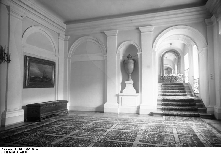
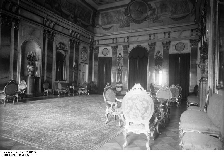
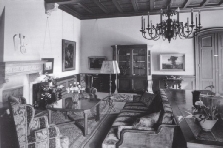
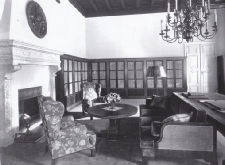
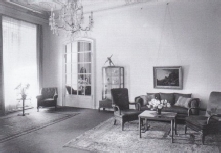
Inside the Reichspräsidentenpalais
(pictures: Bundesarchiv, wikipedia, 1925)
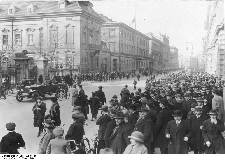
The Wilhelmstrasse in front of the palace
(pictures: Bundesarchiv, wikipedia, 1925)
The Wilhelmstrasse today
(picture: the Hitlerpages, 2009)
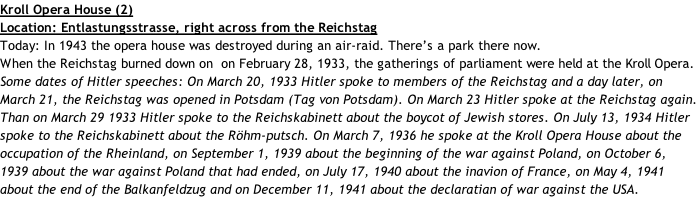
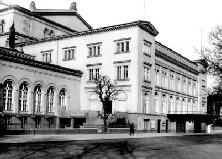
The Kroll Opera House in 1920 (picture: Berlin, Damals und Heute, 2009)
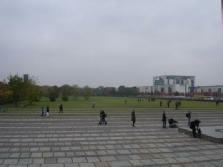
The location of the Kroll Oper today. The opera house was located in the park behind the road.
(picture: the Hitlerpages, 2012)
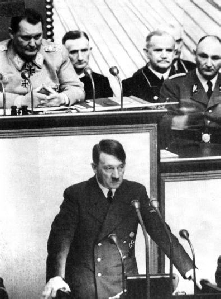
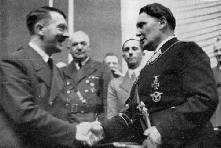
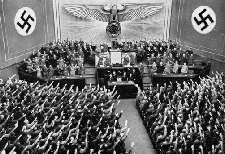
Hitler speaks at the Kroll Oper, March 19, 1941. Göring is right behind him.
(picture: Hitler's Handlangers, 2004)
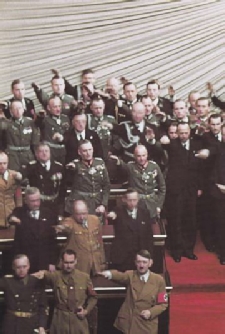
Reichstag meeting on April 28, 1939 (picture: Reichshauptstadt Berlin, 2009)
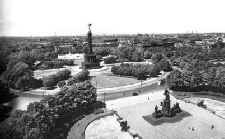
The Königsplatz is called Platz der Republik now. The location of the opera house was at the end of the field in front of the Reichstag.
(picture: the Hitlerpages, 2009)

The Königsplatz in front of the Reichstag in 1935. The Siegessäule is still there. Behind it is the Kroll Oper.(picture: Hauptstadt Berlin, 1990)


The hotel in 1936
(picture: Hauptstadt Berlin, 1990)
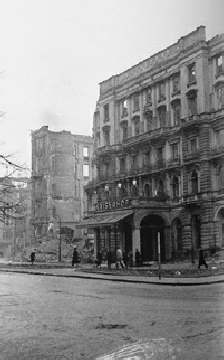
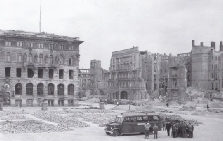
The remains of the hotel in 1945
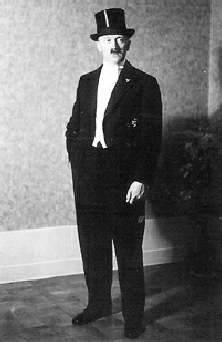
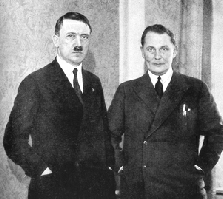
Hitler in Hotel Kaiserhof in January 1933
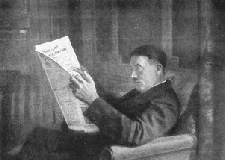
Hitler inside hotel Kaiserhof
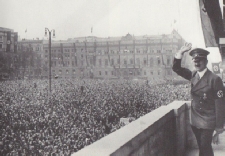
Hitler on the balcony of the extension of the old Reichskanzlei in 1938. Behind the crowded Wilhelmplatz you can see a small part of the hotel on the left side of the picture.
(picture: Hitler, De Aanslagen, 2006)


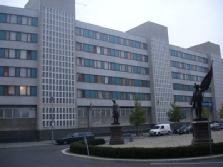
The North Korean Ambassy was built at the Kaiserhof location.
(picture: the Hitlerpages, 2009)
Germania, Großen Halle (3) and (24), (25), (26)
Location: Platz der Republik (than called Königsplatz), next to the Reichstag
Today: The Großen Halle (Great Hall) was never realised.
Adolf Hitler and Albert Speer had great plans with Berlin. An impressive road with large buildings had to run from the Platz der Republik to the General-
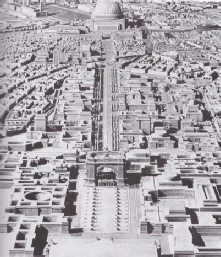

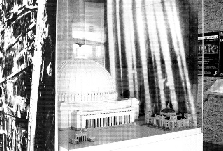
A scale model of Germania. In front is the roof of the South Station. Behind it is the Arc de Triomph and in the back is the Great Hall.
(picture: Het Nazisme, 2007)
This scale model, made for the movie Der Untergang, was part of a temporary exhibition called Mythos Germania in Berlin, near the Voßstrasse. The Great Hall is the large building in the centre.
(picture: Mythos Germania, 2009)
The working grounds of the Great Hall in 1938. In the back the roof of the Reichstag.
(picture: Reichshauptstadt Berlin, 2009)
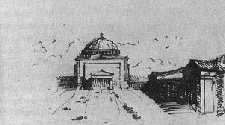
Hitler's sketch of the Great Hall
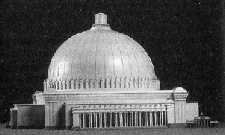
A model of Albert Speers Great Hall
Speers Schwerbealstungskörper was ment to test if the Berlin grounds
for the large buildings planned.
(picture: the Hitlerpages, 2017)
This model shows how large the Great Hall was going to be. The ‘small’ buildings in front of it are the Brandenburger Tor and the Reichstag. (picture: Mythos Germania, 2009)
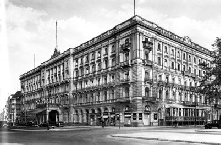
Hotel Adlon (6)
Location: Unter den Linden 75-
Today: Severely dammaged in the war and demolished after the war. Rebuilt and reopened in 1997.
Another hotel, the hotel Kaiserhof, was the most prominent nazi-
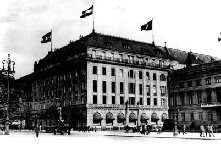
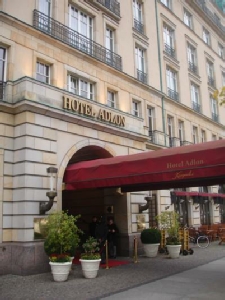
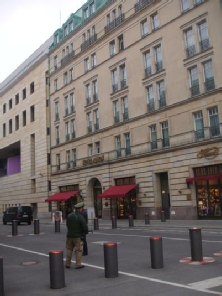
The hotel in 1914
(picture: Berlin, Damals und Heute, 2009)
The main entrance of the hotel and the side of the hotel on the Wilhelmstrasse, in 2009 (pictures: the Hitlerpages, 2009)
Goebbels Town Villa (7)
Location: Corner Ebertstrasse (former Hermann-
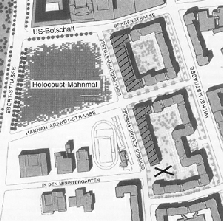
Today: Gone. The Jewish monument is there now. The bunker that was underneath the villa, is still under the ground. One of Goebbels houses stood at this location. Goebbels diaries mention a visit of Adolf Hitler at this villa on december 3, 1944.
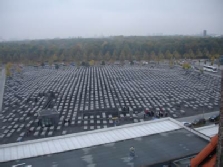
The Jewish Monument.
(picture: the Hitlerpages, 2009)
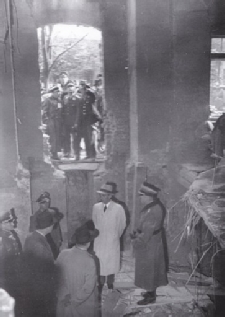
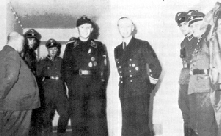
Inspection of the bombed villa. On this picture are, among others, Goebbels, Bormann and Keitel. (picture: Van Capelle and Van de Bovencamp, 2007)

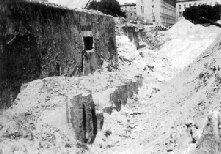

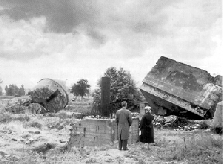
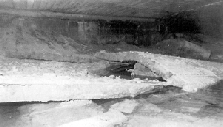

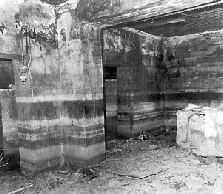
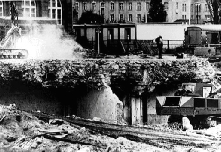
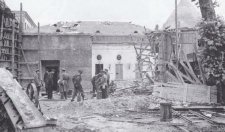
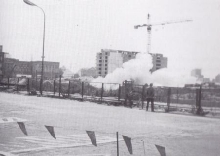
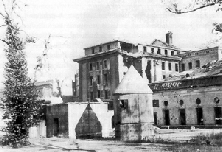
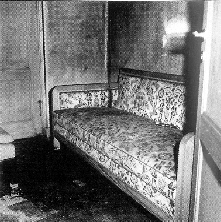
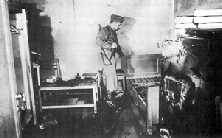
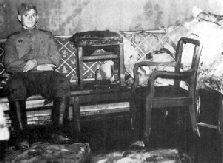
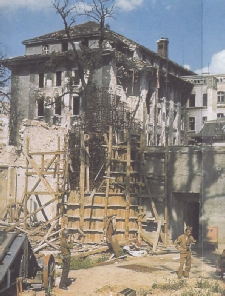
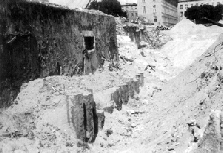
The Vorbunker was demolished to make way for apartments. This picture was taken on July 18, 1988


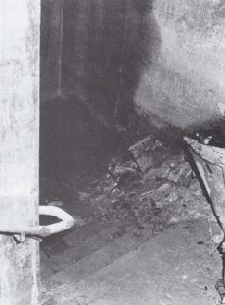
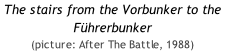
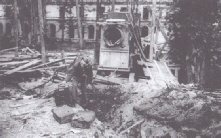
The exit of the bunker on July 5, 1945 (picture: After The Battle,1988)


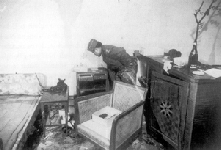



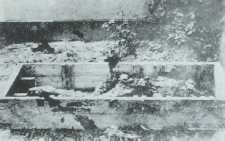
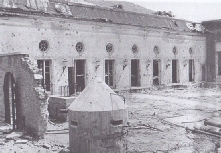
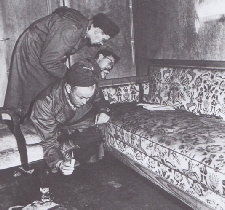
The Russians said that these were Hitler’s remains.
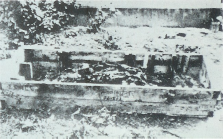
And these are said to be Braun’s remains.
Führerbunker (9), (27)
Location: Crossing and parking space of In der Ministergarten and the Gertrud-
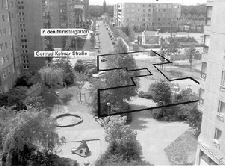
Today: Even in the ground there’s not much more left of the bunker than the ground plate and parts of the wall.
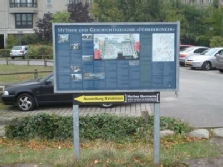
In the garden of the new and old Reichskanzlei a double bunker was built: the Vorbunker and, on a lower level, the Führerbunker. Hitler spend the last period of his life inside the Führerbunker. He married Eva Braun there and both of them commited suïcide there. What happened to the bodies is not clear. On this website you’ll find some places where Russian sources state the bodies have been burried. A small but accurate book about the Führerbunker is Sven Felix Kellerhoff’s Mythos Führerbunker. There never was any information on site about the bunker, but since 2006 there is an informationstand near the bunkersite.
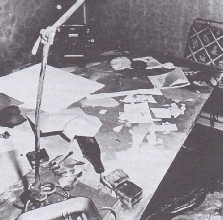




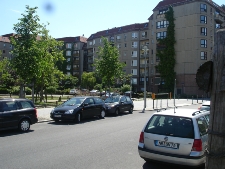
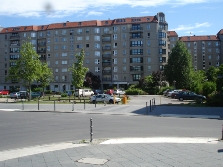
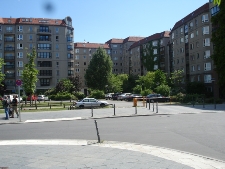
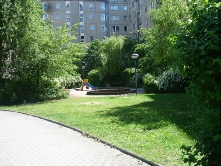
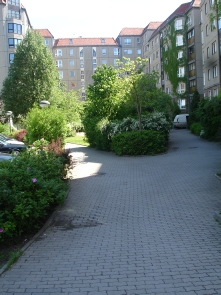
Above and below: The playground near the bunkerlocation
(pictures: the Hitlerpages 2004)
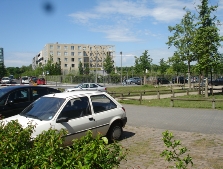
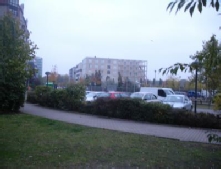
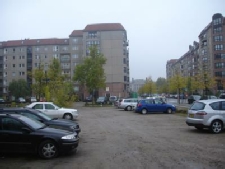
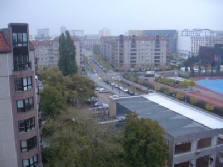
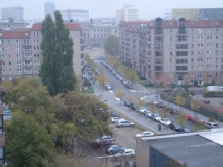
Centre, both pictures: Below this crossing are the remains of the Führerbunker Right: The Reichskanzlei garden area seen from the apartments near it (pictures: the Hitlerpages 2009)
Centre: The bunker site. There was no information about the bunker on the site at that time (2004). Right: Today there is a sign giving information about the Hitler bunker. (pictures: the Hitlerpages, 2004-
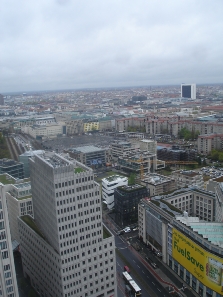
The Reichskanzlei area. The black building in the centre of the picture is on the corner of the Voßstrasse. Behind it you can see the Jewish monument and the apartment buildings on the Wilhelmstrasse.
(picture: the Hitlerpages, 2011)
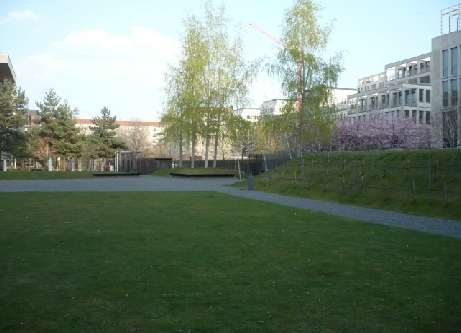
The Reichskanzlei garden area. There’s a parking place now. (pictures: the Hitlerpages, 2004-
The Reichskanzlei gardens used to be here. This picture was taken from the Eberstrasse. The white buildings are on the Voßstrasse, where the new Kanzlei stood. In the back you can see the red roofs of the apartment buildings on the location of the old Reichslanzlei. (picture: the Hitlerpages, 2011)
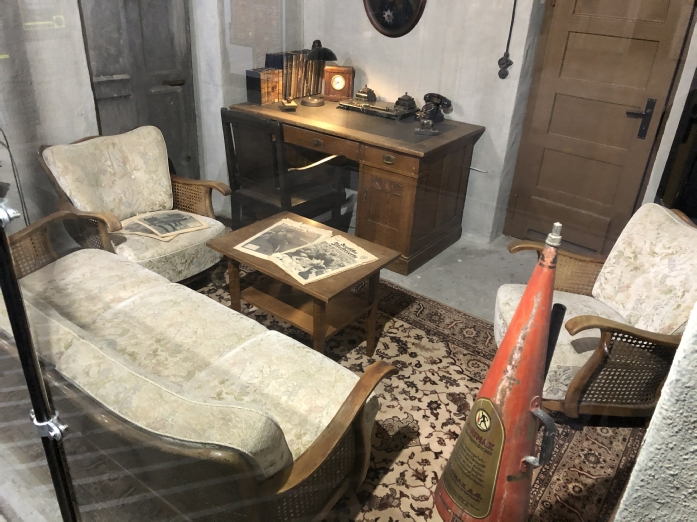
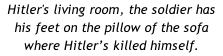
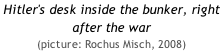
The Berlin Story Bunker exposition on the Schöneberger Strasse 23A has a model of the room where Adolf and Eva Hitler killed themselves. (picture: the Hitlerpages, 2019)
Hitler’s remains (27)
Location: Garden New Reichskanzlei, crossing of In der Ministergarten and the Gertrud-
Today: There’s a road now on the location where the bodies might have been burried in April 1945.
There’s always been a lot of discussion about the remains of Hitler and Eva Braun. There’s a list of alleged locations of Hitler graves, mostly consisting of Russian SMERSH-
The locations where Hitler was burried according to Russian sources:
2. Berlin-
3. Finow (Brandenburg), norteast of Berlin
4. Rathenow (Brandenburg), west of Berlin
5. Magdeburg (Sachsen-
6. Schönebeck (Sachsen-
7. Biederitz (Sachsen-
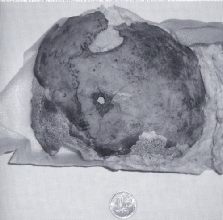
There has always been discussion about the authenticity of Hitler’s skull. This is the skull that was said to be his, but is now said to be of an unknown woman...
(picture: Neumann and Eberle, 2009)
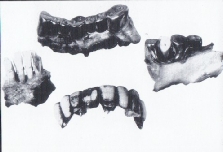
At the archives of the former KGB in Moscow are these teeth. It seems that dentists have confirmed that these teeth are Hiters.
(picture: Neumann and Eberle, 2009)
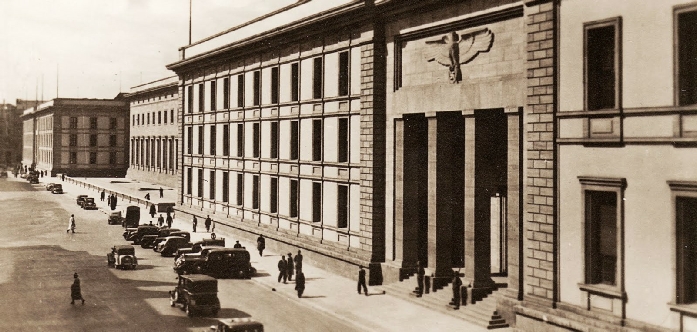
Central Office for the Construction in the Reich Capital (6a)
Location: Pariser Platz 2/4
Today: Acadamy Of Fine Arts. The front of the building is completely renewed. Speers studios must still be there.
Albert Speer planned constructions for the new Berlin here. Doors were made in the gardenwalls so Hitler could enter through the backside of the building from the Reichskanzlei gardens. He often came here to look at the models of Germania and to discuss plans with Speer.
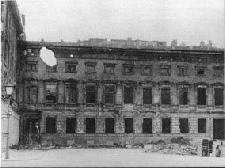
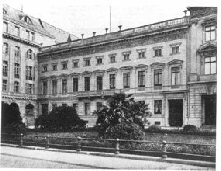
Akademie der Künste, 1907
The same building in 1950
The new building was not there until 2005.(picture: the Hitlerpages, 2014)
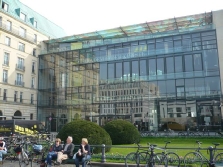
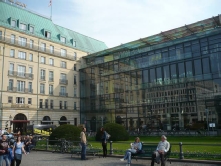
It is said that the old studios of Albert Speer are still inside. Please inform us if you know more about that. (picture: the Hitlerpages, 2014)

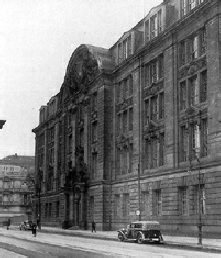

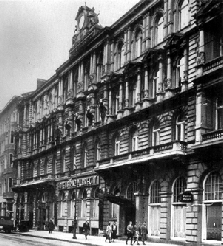
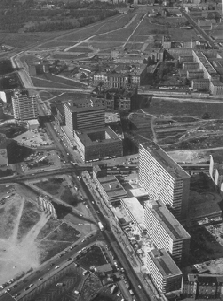
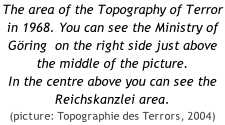
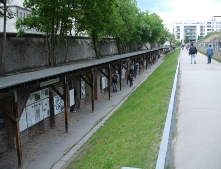
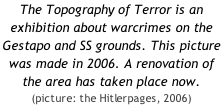
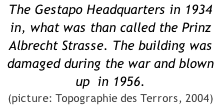

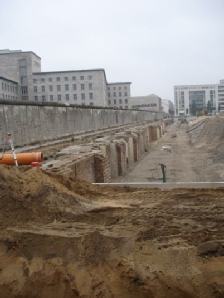
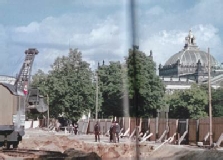
2009: Work in progress. The cellar remains are still there. Behind them a piece of the Berlin wall. Behind that you can see Görings Air Force Ministry.
(picture: the Hitlerpages, 2009)
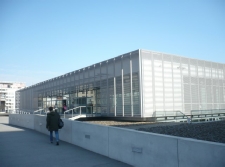
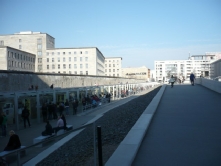
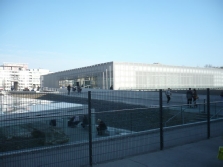
The topography des Terrors after the reconstruction. The cellars are still part of the exhibition. A new documentation centre was built. (pictures: the Hitlerpages, 2015)
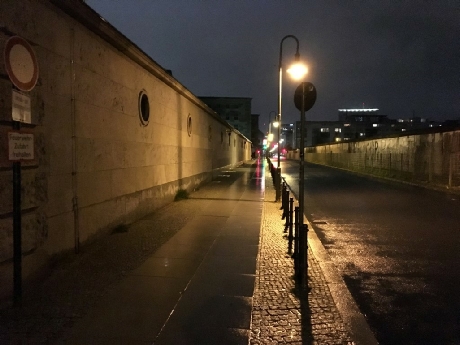
The Niederkirchnerstrasse by night (picture: the Hitlerpages, 2017)
Göring’s Stadtvilla (18a)
Location: Leipziger Platz 11
Today: Gone, some remains are still there.
Göring had a villa next to the building of the Preußischen Landtag. The Berliner Adressbuch shows that in 1933 he still lived at the Kaiserdamm 34, in an apartment on the third floor. In 1934 his address became the Leipziger Platz 11. In the years that followed Göring turned the building next to his house into a Haus der Flieger. His Airforce Administration Building was built behind it, along the Wilhelmstrasse. Together with his first wife, Carin, Hermann Göring owned houses on the Berchtesgadener Strasse 16 and on the Badenschen Strasse 7.
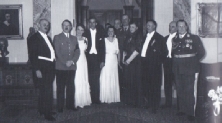
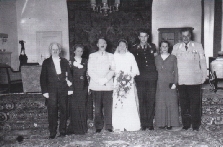
The wedding of dr. Brandt and Anni Rehborn took place in Göring’s house at the Leipziger Platz.
(picture: Neumann and Eberle, 2009)
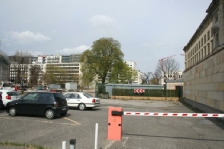
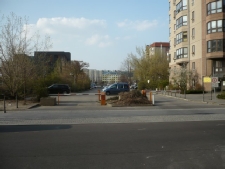
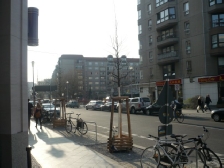
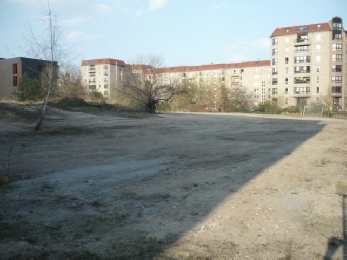
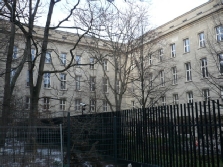
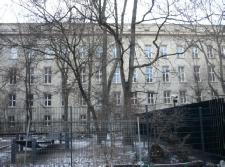
Next to the building of the Pruißischen Lantag, behind the parkingplace, once was Görings Stadtvilla. (pictures: the Hitlerpages, 2009/2012)
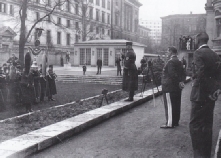
Göring in his garden on Januari 12, 1935: his 42nd birthday. In the background is the building of the Pruißischen Landtag.
(picture: Capelle and Bovencamp, 2007)
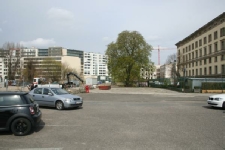
The location of Görings Stadtvilla (pictures: the Hitlerpages, 2012)
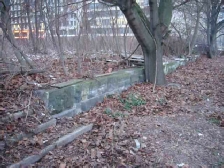
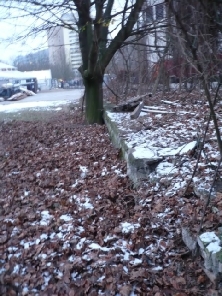
Some remains of the villa can still be found back.In the trees of what still is an open space in the centre of Berlin are the leftovers of a garden wall of the Göring villa (pictures: the Hitlerpages, 2015)
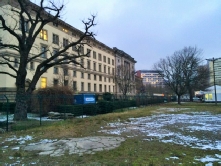
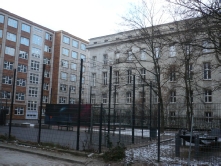
This picture has about the same view as the picture above it. It shows the side of the former Haus der Flieger that was next to Görings Stadtvilla (picture: the Hitlerpages, 2015)
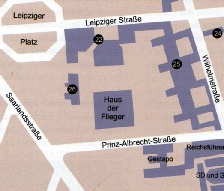
A map of the area of Göring’s house. The location has number 26 on this map (left of the Haus der Flieger).
(map: Capelle and Bovencamp, 2007)
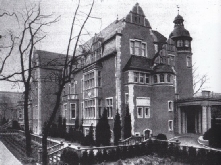
Göring’s Stadtvilla behind the Leipziger Platz
(picture: Capelle and Bovencamp, 2007)
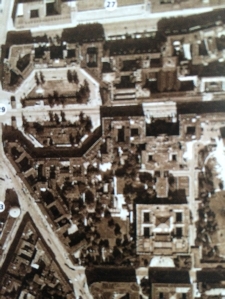

An aerial view of the area between the Leipziger Platz and the former Haus der Flieger in 1943. The red circle marks the location of the villa.
(Picture: old map of Berlin)
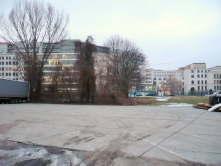
The place where Görings Stadtvilla used to be.
(pictures: the Hitlerpages, 2015)
Office Führer’s Deputy (10a)
Location: Wilhelmstrasse 54
Today: Still there, used by the Federal Ministry of Consumer Protection, Nutricion and Agriculture
The building, that already existed before 1933, at first became Ribbentrop’s Office and the office of the party’s liaison. Later, Rudolf Hess and later Martin Bormann were in command here.
The NSDAP headquarters in the Wilhelmstrasse
(picture: Van Capelle and Van de Bovenkamp, 2007)
The office of Hess and Bormann in 2009 (picture: the Hitlerpages, 2009)
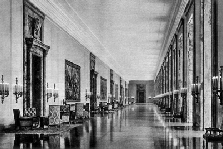


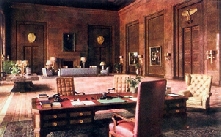

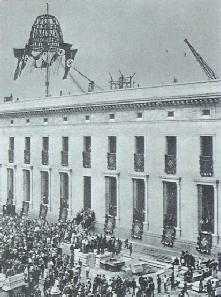

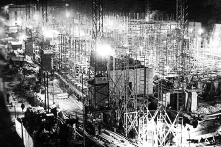
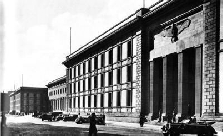
Working men worked day and night to get the Kanzlei ready. This picture was made in 1938.
The Reichskanzlei in 1940
(picture: Hauptstadt Berlin, 1990)
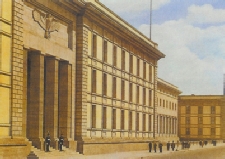

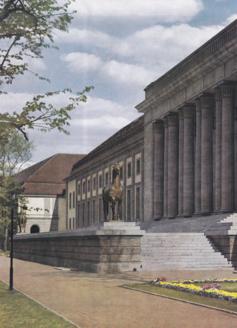
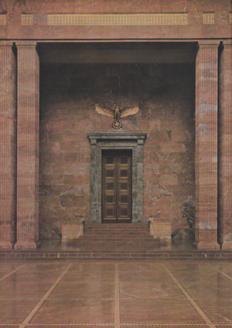
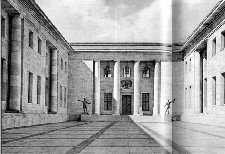
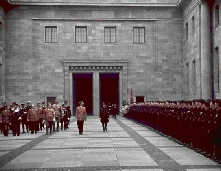
The garden side of the New Reichskanzlei
(picture: After The Battle, 1988)
The material this hall was made of can be found back at the Russian monument in the Treptow Park.
(picture: After The Battle, 1988)

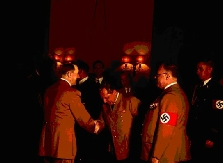
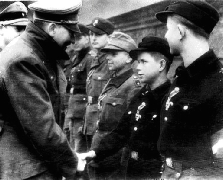
Hitler on March 19, 1945, some-
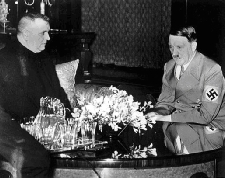
Hitler with Tiso, the leader of Czecho-
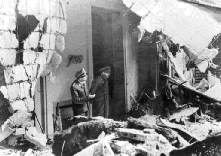
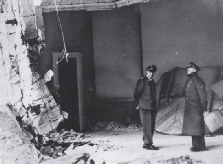
This is one of the last pictures of Hitler. It was made in April 1945. Hitler watches the ruïnes of the Reichskanzlei.
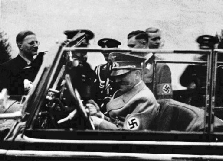
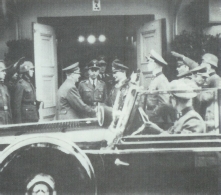
April 20, 1939: Hitler in the Mercedes he got for his 50th birthday.
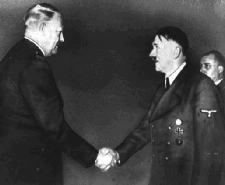
Hitler meets the Norwegian right wing leader Vidkun Quisling in Berlin in January 1945, exact location unknown.
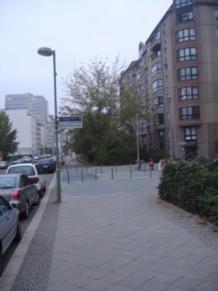
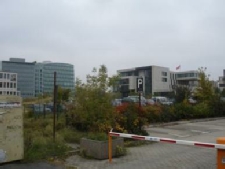
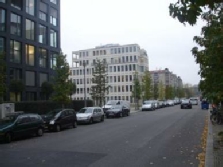


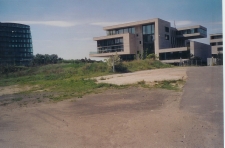
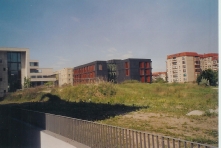
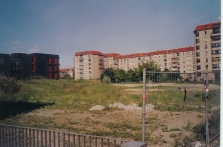
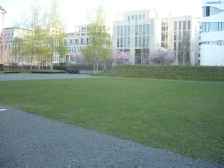
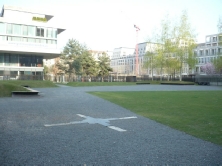

A view into the former Reichskanzlei garden from what’s the Ebertstrasse today. The view of the left and central picture is directly to the location where the Thorak horses stood in Hitler’s garden. (pictures: the Hitlerpages, 2015)
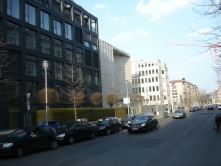
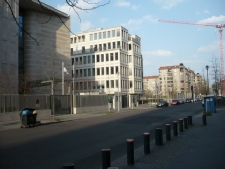
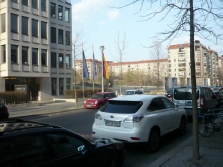
The Voßstrasse in 2015. The open area in between the white building and the DDR-
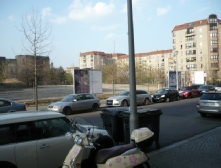
The Voßstrasse in 2015 again. (pictures: the Hitlerpages, 2015)
The Voßstrasse when the Reichskanzlei was still there. View towards what’s the Ebertstrasse today.
(picture: copyright unknown)
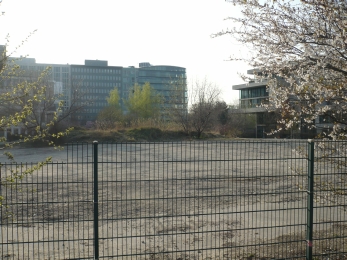
Two pictures of the (still) open space between the buildings on the Voßstrasse. On the map (left) this area is marked 1 and 6. The pool in the garden must have been about here. The pictures where taken on the left and right side of the field. (pictures: the Hitlerpages, 2015)

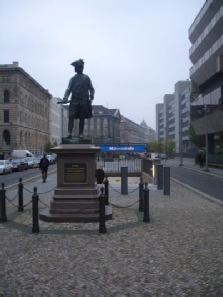
The station entrance. The statue of general Leopold I in bronze was put back in its place here in 2005.
(picture: the Hitlerpages, 2009)
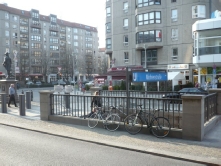
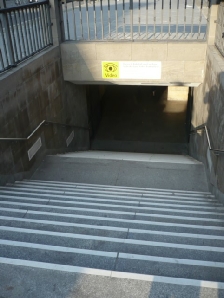
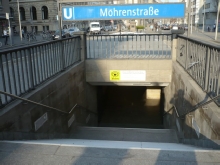
The entrance of U-
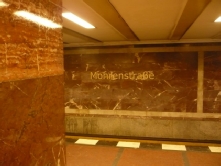
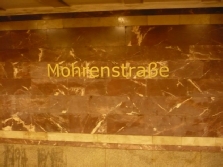
The red marble of U-
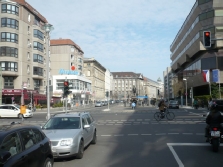
Behind the crossing is what is left of the Wilhelmplatz.
(picture: the Hitlerpages, 2015)
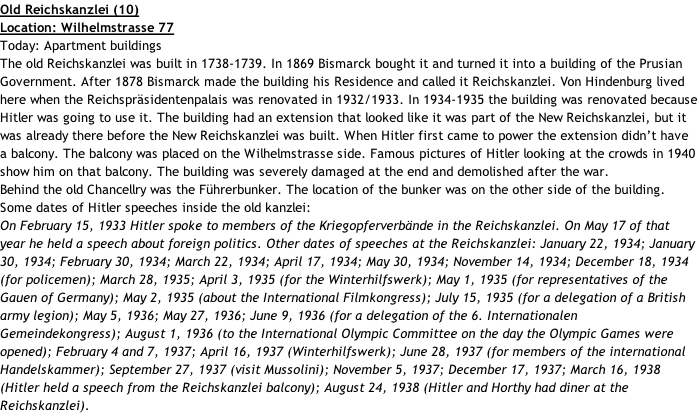
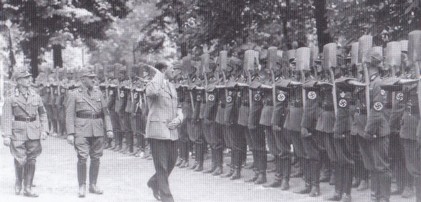
Hitler and Himmler in front of the Old Kanzlei on januari 30, 1938
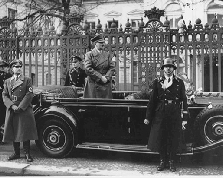
The old Reichskanzlei
(picture: Hauptstadt Berlin, 1990)
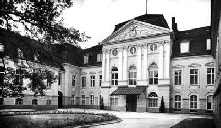
The Reichskanzlei on
Januari 30, 1933
(picture: Reichshauptstadt Berlin, 2009)
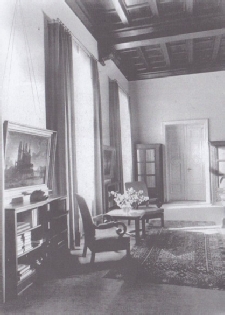

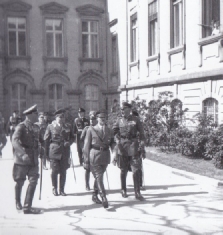
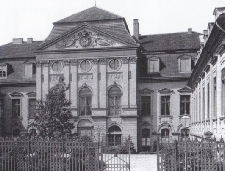
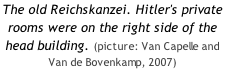
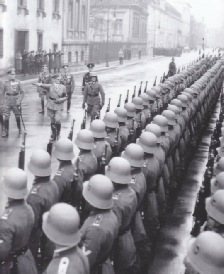
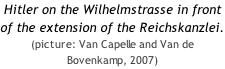
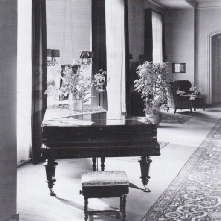
Hitler in front of his Berlin home in November 1934
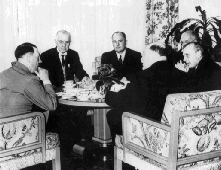
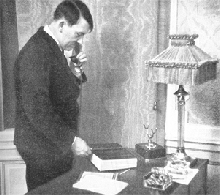
Inside the Reichskanzlei on July 12, 1937. Hitler talks with Thomas J. Watson, head of IBM.
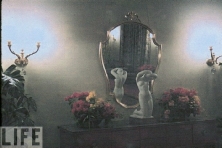
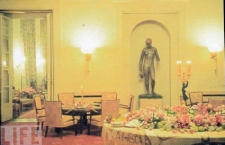
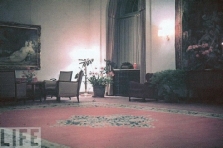
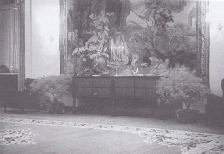
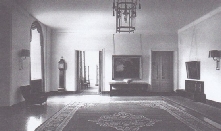
Inside Hitler's apartment
(pictures: LIFE magazine)
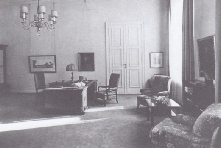

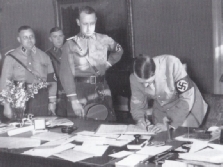
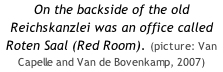
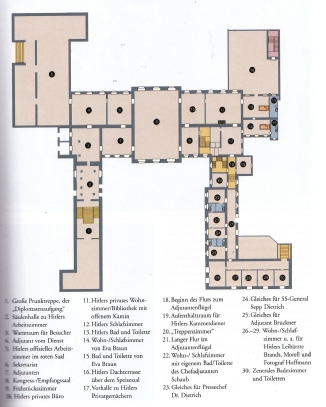

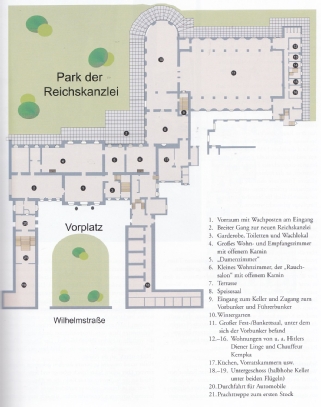

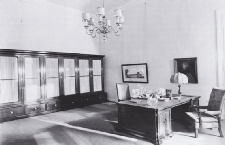






On this picture the balcony has been placed. (picture: After the Battle , 1988)
The Kanzlei-
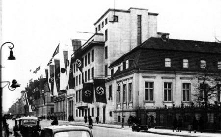
The old Reichskanzlei with its extension, march 1941
(picture: Mythos Germania, 2009)

A view of the Wilhelmstrasse in 1937 with the new part of the old Reichskanzlei in the centre
(picture: Berlin, Damals und Heute, 2009)
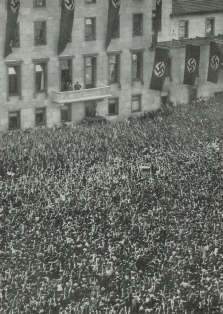
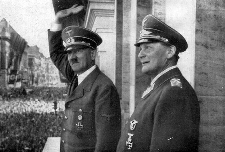

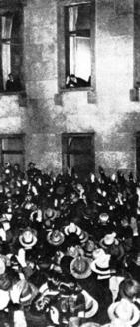
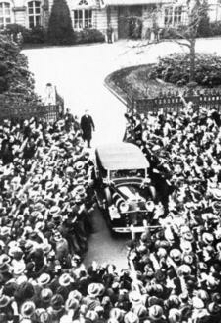
Hitler hanging out a window of the Kanzlei to greet the crowd in 1933. A bolcony was needed. (picture: After the Battle , 1988)
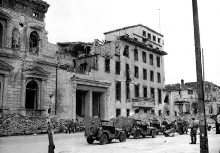
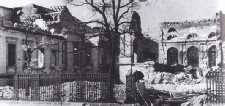
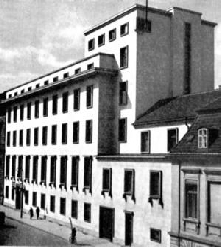
The extension of the old Reichkanzlei after the war
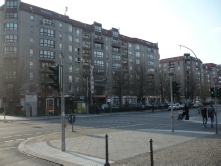
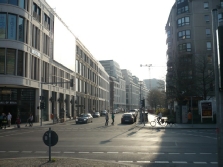
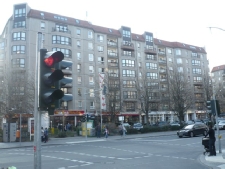
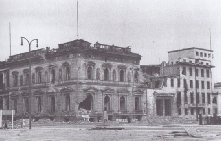
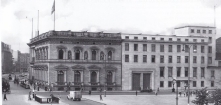
The corner of the Voßstrasse and the Wilhelmstrasse. Here the corner building (Palais Borsig) and the extension of the old chancellery stood. The open space between the two appartment buildings and the building on the right roughly is the location of the old chancellery.
(pictures: the Hitlerpages, 2015)
The corner of the Voßstrasse and the Wilhelmstrasse, looking into the Voßstrasse
(picture: the Hitlerpages, 2015)
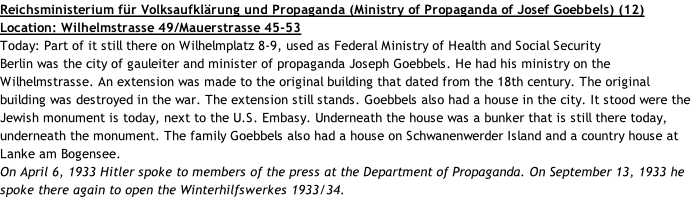
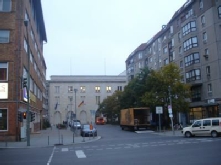
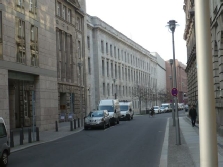



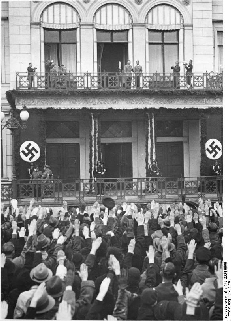
Hitler onthe balcony of the old building of the ministry of propaganda in 1937
(picture: Bundesarchiv)
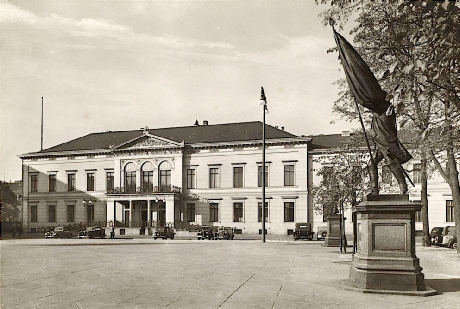
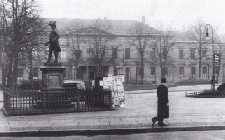
The Wilhelmplatz and the old building of the ministry of propaganda
(picture: copyright unknown)
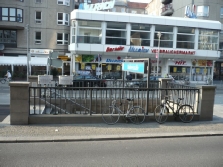
Only a small square remains.This picture was taken from behind the side of the U-


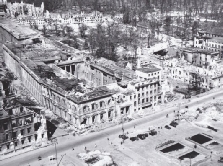
The government district in Berlin was located at the Wilhelmstrasse. This page shows the most prominent Hitler sites in the area between the Reichstag (North), the Niederkirchner Strasse (South), the Tiergarten (West) and the Mauerstrasse (East), together with some information about Albert Speers plans for the remake of Berlin: Germania.
1. Reichstag 2. Kroll Oper
3. Germania, Great Hall 4. Sovjet Ehrenmal
5. Brandenburger Tor 6. Hotel Adlon
6a. Central Office for the Construction in the Reich Capital 7. Goebbel’s Town Villa
8. Reichspresidents Palace 9. Führerbunker
10. Old Reichskanzlei 10a. Office Führers Deputy 11. New Reichskanzlei 12. Ministry Of Propaganda (Goebbels) 13. U-
25. Germania, South Station 26. Germania, Heavy Load Testing Body 27. Location burning of Hitler and Brauns bodies
Berlin Government District weergeven op een grotere kaart



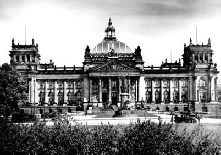
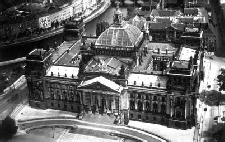
The Reichstag in 1928
(picture: Hauptstadt Berlin, 2008)
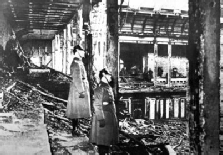
After the fire in 1933
(picture: The Gestapo 1933-
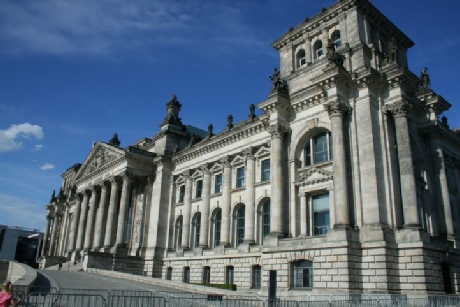
The Reichstag by day
(picture: the Hitlerpages, 2015)
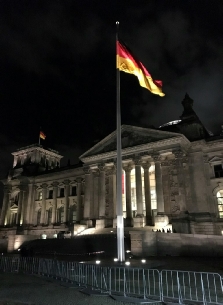
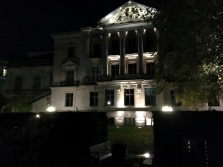
The Reichstag by night
(picture: the Hitlerpages, 2017)
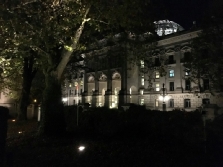
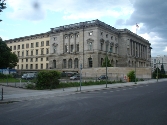
Reichstagspräsidentenpalais
Location: Friedrich-
Today: Still there.
When Hermann Göring became Reichstagspräsident on August 39, 1932, he started using this building. There was an underground corridor from the palace to the Reichstag, that was possiby used to set the Reichstag on fire. It was not untill 1990 when it was discovered, because the Berlin wall ran in between the Reichstag and the Reichstagspräsidentenpalais. A secret meeting of Adolf Hitler and industrial leaders took place here on Februari 20, 1933.

The Reichstagspräsidentenpalais (left) and the Reichstag (right) on the bank of the river Spree. (picture: wikipedia, 2006)
The palace at night
(pictures: the Hitlerpages, 2017)
Tailor Wilhelm Holters
Location: Wilhelmstrasse 49
Today: Ministry of Health and Social Security
Wilhelm Holters made Hitler’s uniforms. He must have had an office at Wilhelmstrasse 49. Because that address was part of Goebbels Ministry of Propaganda, he probably had room inside the ministry. His shop was located at the Tauentzienstrasse 16, in Berlin-
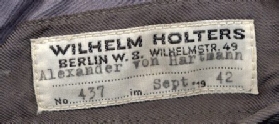
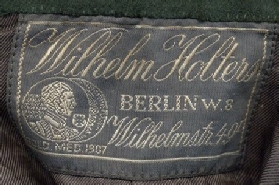
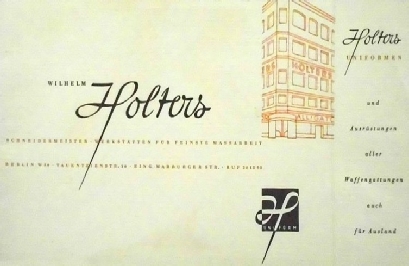
Two labels with the address Wilhelmstrasse 49 and a card with a drawing of Holters shop on the Tauentzienstrasse 16
(pictures: no copyrights)