

Unter den Linden
Unter den Linden is one of the most famous streets of Berlin. On the one side of Unter den Linden
you’ll find the Brandenburger Tor,
on the other side is the Museum Insel with the Lustgarten. Only the buildings that could be linked directly to Hitler are on this page.
1. Reichstag
2. Brandenburger Tor
3. Hotel Adlon 4. Staatsoper
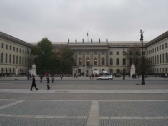
5. Neue Wache
6. Zeughaus
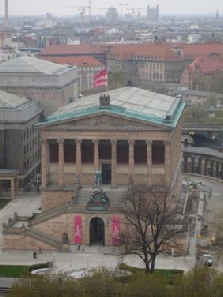
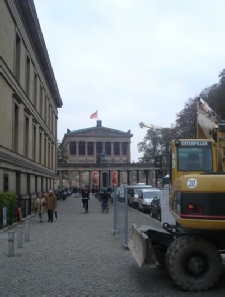
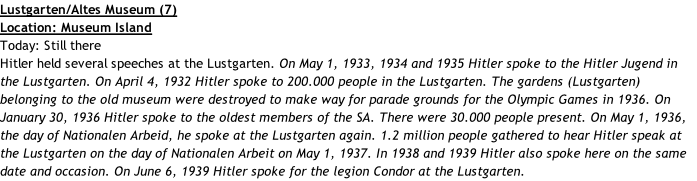
7. Lustgarten
8. Berliner Dom
9. Alte Nationalgalerie
10. Rotes Rathaus 11. Stadtschloß
12. Bodemuseum
Reichstag (1)
Location: Platz der Republik 1
GO TO GOVERNMENT DISTRICT
Brandenburger Tor (2)
Location: Pariser Platz
GO TO GOVERNMENT DISTRICT
Hotel Adlon (3)
Location: Unter den Linden 75-
GO TO GOVERNMENT DISTRICT
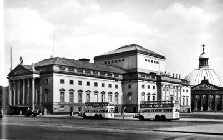
Staatsoper (Lindenoper) (4)
Location: Unter den Linden 7
Today: The original building was bombed several times during the war, it was rebuilt after the war.
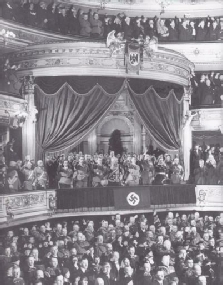
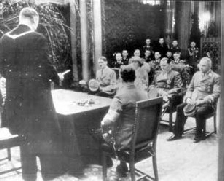
On the occasion of the Heldengedenktag on February 25, 1934 Hitler spoke at the Staatsoper. Because of tension between the NSDAP and the army Hitler called the German leaders to a meeting in the Staatsoper on January 3, 1935. Hitler said in his speech that the German state rested on two pillars: the Wehrmacht and the NSDAP.
On March 16, 1935 Hitler announced German remilitarization in a speech where the ambassadors of Italy, France and England are present. The day after that, Blomberg held a speech in the Staatsoper in the presence of Hitler and August von Mackensen. The 17th of March became a remembrance day, known as Heldengedenktag.
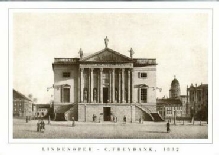

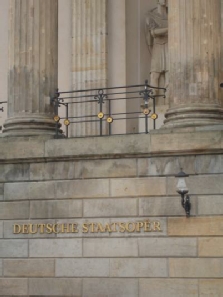
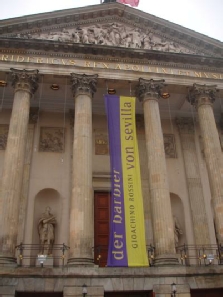
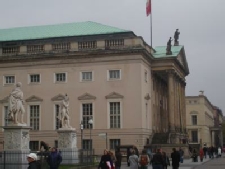
The Staatsoper in 1935
(picture: Hauptstadt Berlin, 1990)
Hitler inside the operahouse in 1935
(picture: De Gestapo, 2004)
The Staatsoper in 2009 (picture: the Hitlerpages, 2009)

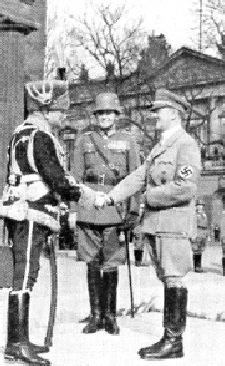
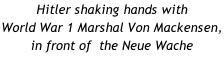
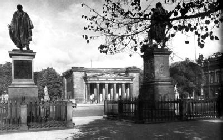
The Neue Wache in 1940
(picture: Hauptstadt Berlin, 1990)
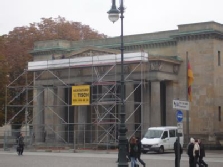
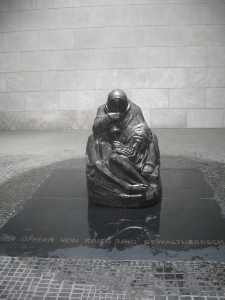
Centre: The memorial being renovated
(pictures: the Hitlerpages, 2009)
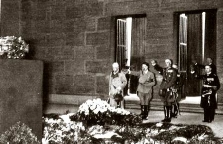
Hitler inside the Neue Wache (picture: source unsure)
The inside of the memorial today (picture: the Hitlerpages, 2011)
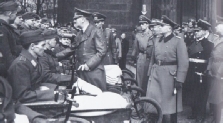
Heldengedenktag March 15, 1942: Hitler meets with woonded soldiers in front of the Neue Wache
(picture: Neumann and Eberle, 2009)


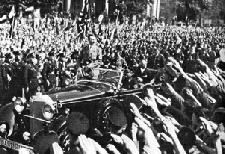
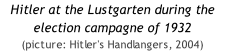
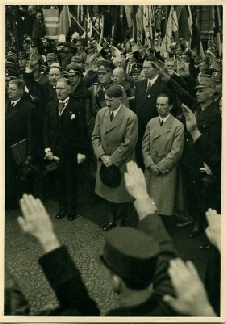

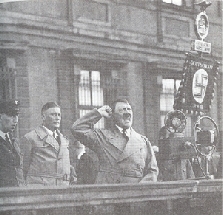
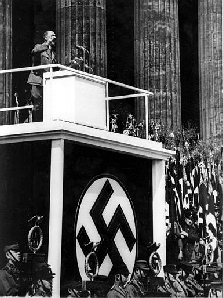
Hitler speaking at the Lustgarten on May 1, 1932
Another speech of Adolf Hitler on May the first, this time in 1936
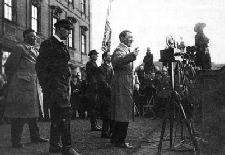
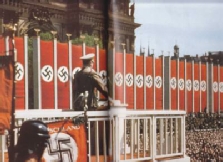
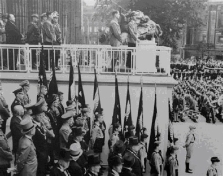
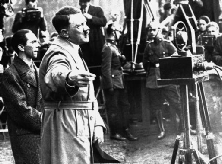
Large crowds gathered to hear
Hitler speak
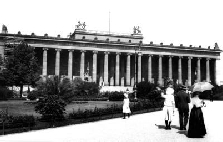
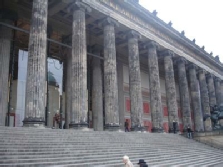
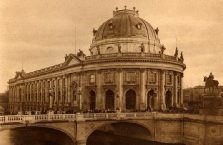
The old museum in 1910
(picture: Berlin, damals und heute, 2009)

Goebbels opening of the Olympic Games in 1936
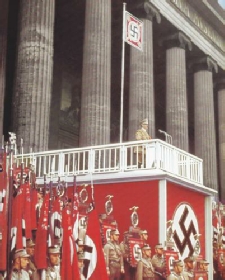
Hitler in front of the old museum
on May 1, 1938
(picture: Reichshauptstadt Berlin, 2009)
May 1, 1938
(picture: Reichshauptstadt Berlin, 2009)
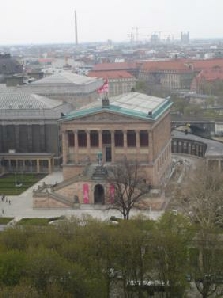
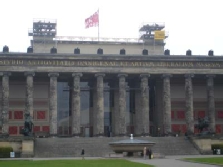
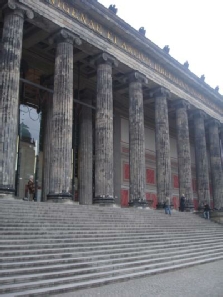
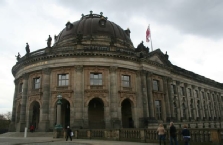
The old museum in 2009
(picture: the Hitlerpages, 2009)
The old museum in the Lustgarten.
(picture: the Hitlerpages, 2009)
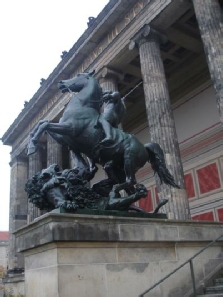
One of the statues today
(picture: the Hitlerpages, 2009)
The old museum
(picture: the Hitlerpages, 2009)
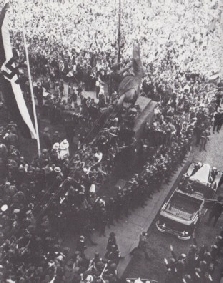
May 1, 1934: Hitler leaves after his speech. One of the statues in front of the museum is in the centre of the picture.
Berliner Dom (8)
Location: Bodestrasse, Museum Island, facing the Lustgarten
Today: During World War II the building was bombed and severely damaged. In 1975 reconstruction started. In 1993 the church reopened.
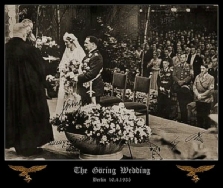
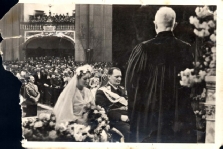
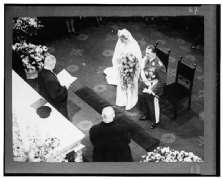
On April 10, 1935 Hermann Göring married Emmy Sonnemann at the Rote Rathaus and the Berliner Dom. Hitler was Görings best man. On February 5, 1933 Hitler spoke at the large state funeral of SA-
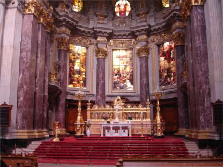
Inside the Dom
(picture: the Hitlerpages, 2009)
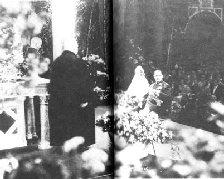
The wedding ceremony of Hermann Göring inside the Dom. Hermann and Emmy Göring are in front of the altar. Adolf Hitler is behind them, on the front row. (picture: Hitler's Handlangers, 2004 and some other sources)
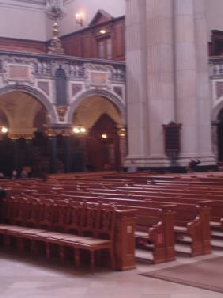
The front row of the church today (picture: the Hitlerpages, 2010)
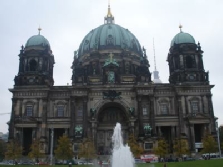
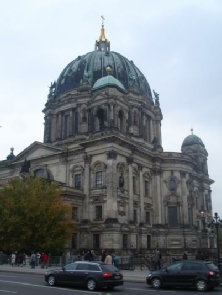
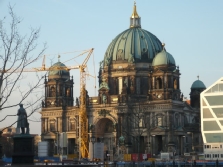
The Berliner Dom today
(pictures: the Hitlerpages, 2009-
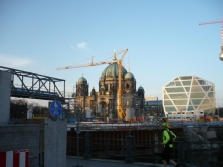
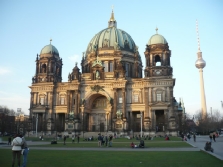
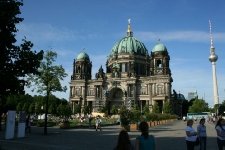
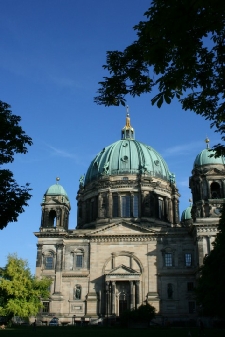
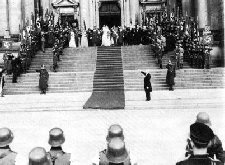
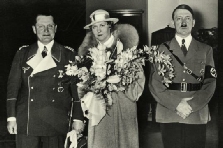
Hermann and Emmy Göring on the red carpet in front of the Dom after the service. Adolf Hitler is still behind them.
(pictures: Hitler's Handlangers, 2004; Kohl, 2014)
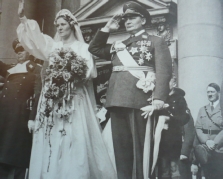
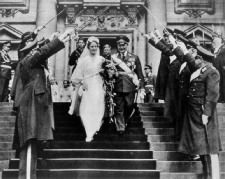
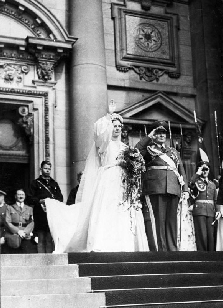



Stadtschloss (11)
Location: Schloßplatz
Today: Damaged in the war. Demolished after the war and replaced by the Palast der Republik in the DDR. Now ‘three façades of the palace will be rebuilt, but the interior will be a postmodern structure to serve as a cultural-
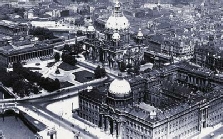
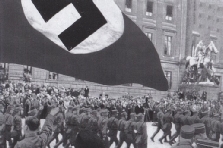
Across the road from the Lustgarten was a royal palace called the Stadtschloss. Hitler held several speeches at the Lustgarten. A picture below shows Hitler in front of the palace.
Adolf Hitler (left) in front of the Stadtschloß (picture: Van Capelle and Van de Bovenkamp, 2007)
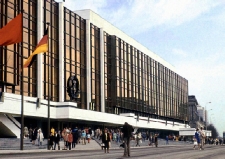
The Palast der Republik on the Stadtschloß location
(picture: wikipedia)
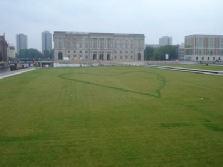
The site of the Schloß in 2009
(picture: the Hitlerpages, 2009)
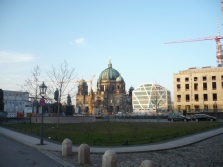
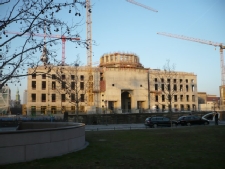
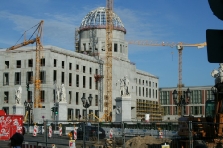
The Stadtschloß during its construction (picture: the Hitlerpages, April 2015)
The Stadtschloß a few months later (picture: the Hitlerpages, August 2015)
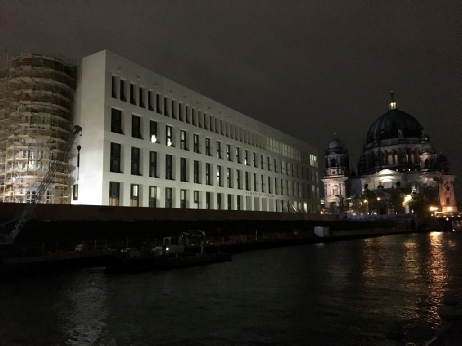
The backside of the Stadtschloss (picture: the Hitlerpages, 2017)
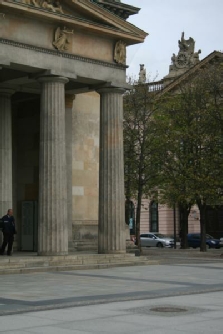
An old picture of the Stadtschloß
Zeughaus (6)
Location: Unter den Linden 2
Today: Deutsche Historische Museum
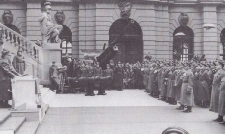
On March 10, 1940, March 16, 1941, March 15, 1942 and on March 21, 1943 Hitler held a speech on occasion of the Heldengedenktag. On that last date a plan to kill Hitler failed. ‘The plan was that on March 21, 1943, Gersdorff, as an expert, should explain individual exhibits to Hitler in the Zeughaus. While Hitler was touring the exhibition rooms, Gersdorff kept close to him constantly with two bombs in his coat pockets. But unlike in previous years, on this occasion Hitler left the exhibition after only a short tour. Hitler’s unexpectedly brief visit made it impossible for Gersdorff to carry out the assassination attempt.’ (© 1996 -
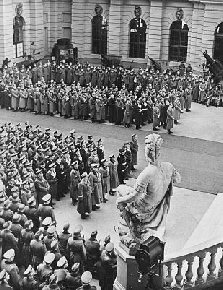
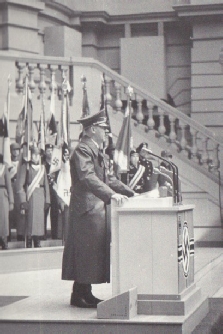
Hitler speaks at the Zeughaus in 1944. (picture: Hitler, de aanslagen, 2006)
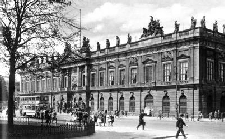
The Zeughaus houses the German Historical Museum today. (pictures: the Hitlerpages. 2009)
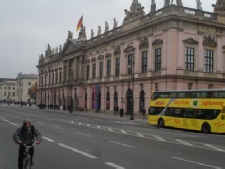
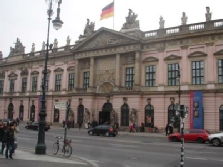
The Zeughaus in 1930
(picture: Hauptstadt Berlin, 1990)
Heldengedenktag 1940 at the courtyard of the Zeughaus
(picture: www.lmg-
Hitler at the Zeughaus in 1941
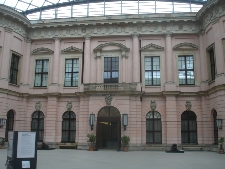
The courtyard of the Zeughaus today. Notice that the stairs have gone. (picture: the Hitlerpages, 2011)
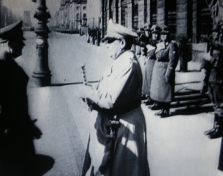
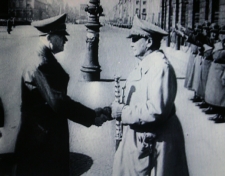
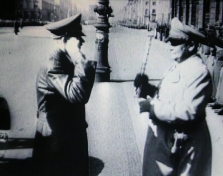
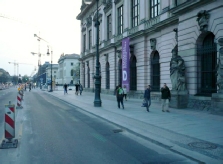
Hitler arrives at the Zeughaus, where Hermann Göring welcomes him. (picture: stills from a movie)
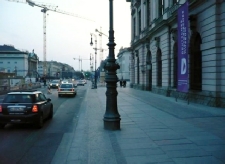
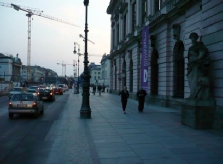
The same location in front of the Zeughaus. (pictures: the Hitlerpages, 2014)


Rote Rathaus (10)
Location: Rathausstraße (Mitte) (There are two Rathausstraßes in Berlin!); The street was called Königstraße until 1951
Today: Damaged in the war, but the building was restored in the 50’s.
When Hermann Göring married Emmy Sonneman on April 10, 1935 Hitler was his best man. The wedding took place in the Berliner Rathaus. After that they went to the Berlin Dom.
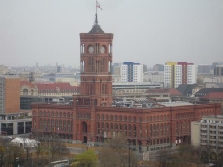
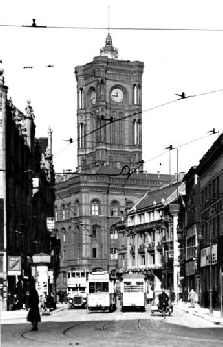
The Rathaus in 1930
(picture: Berlin, Damals und Heute, 2009)
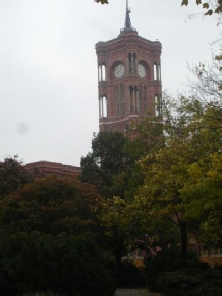
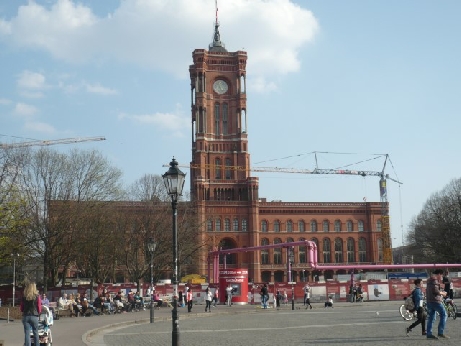
The tower of das rote Rathaus
(picture: the Hitlerpages, 2009)
Das rote Rathaus
(picture: the Hitlerpages, 2015)
Das rote Rathaus as seen from the Berliner Dom
(picture: the Hitlerpages, 2010)
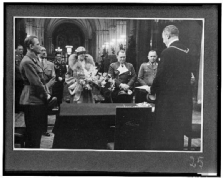
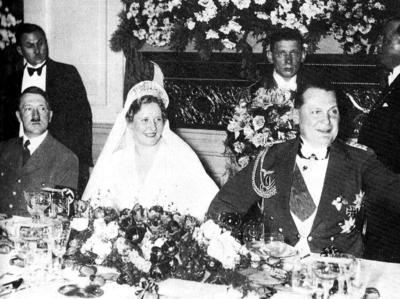
Görings marriage ceremony at the Rathaus (picture: source unsure)
I don’t know where this picture was taken. Since Görings wife still wears ‘normal’ clothes, it must have been taken right before of right after the ceremony at the Rathaus.
(picture: unknown)
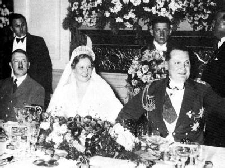
The wedding dinner took place at Hotel Kaiserhof. (picture: unknown)
Hitler at the wedding of Hermann Göring inside the red Rathaus
(picture: source unknown)
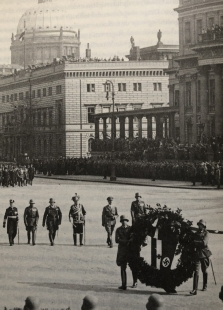
The inside of the memorial today (picture: Ullrich, 2013)